Hibachi Chicken: Easy Japanese Steakhouse Dinner at Home
 By Marcus Chen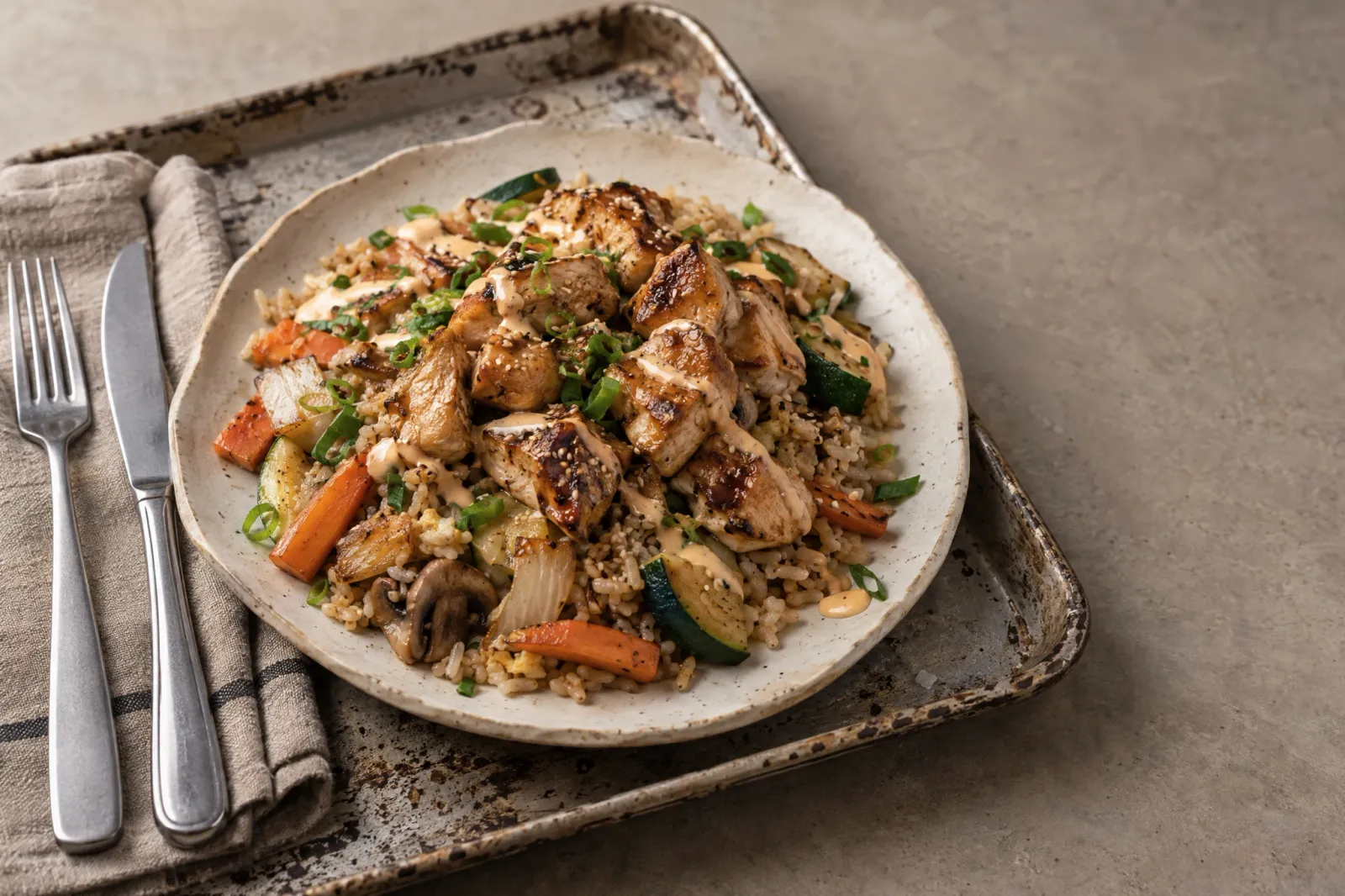
Make Japanese steakhouse hibachi chicken at home: seared marinated chicken, buttery fried rice, and sautéed vegetables with creamy yum yum sauce.
The recipe
Researched & sourced- Prep
- 20 mins
- Cook
- 20 mins
- Total
- 40 mins
- Serves
- 4
- Calories
- 499 kcal
Ingredients
Makes 4 servings
- 1 lb boneless, skinless chicken breasts, cut into bite-sized pieces
- 2 tbsp soy sauce
- 2 tbsp hoisin sauce
- 4 cloves garlic, minced
- 1 tsp fresh minced ginger
- 1 tbsp olive oil
- 1 carrot, thinly sliced
- 1 yellow onion, chopped
- 1 zucchini, chopped
- 1 cup mushrooms, halved
- 2 cups cooked white rice, preferably day-old
- 2 tbsp butter
- 1 egg
- 3 tbsp soy sauce
- 3/4 cup mayonnaise
- 1 tbsp ketchup
- 1 tbsp granulated sugar
- 2 tsp rice vinegar
- 1/2 tsp garlic powder
- 1/2 tsp onion powder
- 1/2 tsp paprika
Instructions
- 1
Marinate the chicken: toss the chicken with 2 tbsp soy sauce, 2 tbsp hoisin, 4 cloves garlic, and 1 tsp ginger, then let it sit for 10–15 minutes.
- 2
Make the yum yum sauce: whisk 3/4 cup mayonnaise with 1 tbsp ketchup, 1 tbsp sugar, 2 tsp rice vinegar, 1/2 tsp garlic powder, 1/2 tsp onion powder, and 1/2 tsp paprika until smooth.
- 3
Sauté the vegetables: heat 1 tbsp olive oil in a large skillet over medium-high heat and cook the carrot, onion, zucchini, and mushrooms for 6–8 minutes until tender-crisp, then set aside.
- 4
Cook the chicken: reheat the skillet over medium-high, add the chicken in a single layer, and cook 5–7 minutes, stirring only once or twice, until browned and it reaches 165°F internal.
- 5
Fry the rice: melt 2 tbsp butter in the skillet, scramble the egg, add the day-old rice and 3 tbsp soy sauce, and cook about 5 minutes until hot and lightly toasted.
- 6
Assemble: divide the rice among plates, top with the chicken and vegetables, and drizzle with the yum yum sauce.
Quantities, temperatures, and times are researched from the published sources listed at the bottom of this page — never first-person kitchen tests.
Hibachi chicken is the Japanese steakhouse dinner you can build in one skillet: marinated chicken seared over medium-high heat, buttery fried rice, sautéed vegetables, and a creamy yum yum sauce. The method hinges on a hot pan and pulling the chicken right at 165°F.
What Is Hibachi Chicken (and Why It Works in a Skillet)
Hibachi chicken is the seared chicken-and-rice plate North American diners know from teppanyaki-style Japanese steakhouses, where the meal is cooked fast on a large flat top. At home, the same browned, savory result comes from a regular skillet and a few minutes of high heat, because the chicken is cut small and cooked in a single layer.
The dish gets its character from a quick, high-heat sear rather than a slow braise. The Cooking Jar version stir-fries the chicken for about 5 minutes until the sauce cooks down and the outside is seared, while 40 Aprons sautés it for 5 to 7 minutes, stirring only once or twice. The Girl on Bloor’s version — the closest match to this recipe — yields 4 servings at 499 calories per serving, which covers the chicken, rice, vegetables, and sauce as a full dinner.
The Right Pan Heat and Oil for a Proper Sear
The sear depends on getting the pan hot before the chicken goes in. The Girl on Bloor cooks the chicken in a large skillet over medium-high heat for about 10 minutes, stirring occasionally, while 40 Aprons uses the same medium-high setting for a 5 to 7 minute sauté. That heat level is the balance: hot enough to brown the surface quickly, low enough that the sugary marinade does not scorch before the center cooks through.
The oil is simple, and the sources do not reach for anything exotic. The vegetables start in 1 tablespoon of olive oil, and the fried rice finishes in butter. What matters more than the specific fat is that the chicken hits a pan that is already hot and stays in a single layer, so each piece sears instead of steaming.
Chicken Breast vs. Thigh — and How to Keep It Juicy
The cut is a real decision, and the published recipes split on it. This recipe uses 1 pound of boneless, skinless chicken breasts cut into bite-sized pieces, while The Wooden Skillet builds its version around 6 boneless, skinless thighs. Thighs are the more forgiving option on a hot pan, but breast works when the pieces are cut to a uniform bite size and stirred only occasionally.
The technique is what protects lean breast meat. Uniform pieces cook at roughly the same rate, and stirring only once or twice lets each piece develop a brown crust instead of drying out. The Wooden Skillet cooks thighs for 3 to 5 minutes per side until they reach 165°F, then lets the chicken rest for 5 minutes. That rest step matters because it lets the juices settle before the chicken is sliced or served. For an air-fryer route, The Country Cook cooks the chicken for 7 to 11 minutes at 380°F.
The safety target is the same for both cuts. The USDA and FoodSafety.gov list 165°F as the safe minimum internal temperature for all poultry, so the sear-and-rest sequence above is how the chicken reaches that temperature without overcooking.
How to Marinate Hibachi Chicken (and for How Long)
The marinade is a short, soy-based blend: 2 tablespoons of soy sauce, 2 tablespoons of hoisin, 4 cloves of garlic, and 1 teaspoon of fresh ginger. The soy sauce brings salt and umami, the hoisin adds sweetness and depth, and the garlic and ginger perfume the meat.
Marinating time is where the top results disagree. The Country Cook says to marinate for 10 to 15 minutes, while Riceland recommends refrigerating the chicken for at least 8 hours. Both make sense for what they are doing: a short soak seasons the surface of bite-sized pieces, while an overnight soak pushes flavor deeper. Because this recipe cuts the chicken small, the shorter 10 to 15 minute window is enough, and it keeps the dinner on a weeknight schedule.
Soy sauce is the main sodium driver here, so the published counts run high. The Girl on Bloor lists 2,106 mg of sodium per serving, and 40 Aprons lists 1,389 mg. The simplest way to pull that down is to swap in low-sodium soy sauce, which is exactly what 40 Aprons does with 3 tablespoons of it.
Yum Yum Sauce vs. Mustard Sauce
Japanese steakhouses serve hibachi with a dipping sauce, and there are two classics people mean by the name. Yum yum sauce is the sweet, creamy drizzle — mayonnaise whipped with ketchup, sugar, and rice vinegar — while hibachi mustard sauce is a lighter, sharper dip built on mayonnaise and mustard.
Yum yum sauce uses 3/4 cup of mayonnaise as its base, rounded out with ketchup, sugar, rice vinegar, and paprika into a sweet-tangy cream. The mustard sauce is the leaner cousin, built on 1/2 cup of light mayonnaise with a mustard bite.
| Yum yum sauce | Mustard sauce | |
|---|---|---|
| Base | 3/4 cup mayonnaise | 1/2 cup light mayonnaise |
| Flavor | Sweet, creamy, tangy | Sharper, lighter, savory |
| Best for | Drizzling over the chicken and rice | A tangier side dip |
For this recipe, the yum yum sauce is the one to drizzle over the finished plate; a mustard sauce works when the cook wants less sweetness and more tang. For another from-scratch sauce to spoon over dinner, try the homemade Alfredo sauce.
Storage, Reheating, and Freezing
Leftovers keep well, though the sources give slightly different windows. The Girl on Bloor says the meal keeps in the fridge for up to 5 days, while The Country Cook and The Wooden Skillet both put the window at 3 to 4 days. 40 Aprons breaks it down by component: rice for up to 3 days, and the chicken and vegetables for up to 5 days.
Freezing works best by the component too. The Girl on Bloor freezes the cooked chicken and fried rice for up to 3 months. Storing each part in its own airtight container keeps the rice from turning the chicken soggy as it defrosts.
Reheating is where the chicken can dry out, so use gentle heat and stop at the right temperature. The USDA lists 165°F as the safe internal temperature for reheated leftovers. A covered skillet or a low oven holds in steam, and pulling the chicken at that temperature — not past it — is what keeps the pieces tender.
Browse more Asian recipes or dinner recipes for other weeknight plates.
Frequently asked questions
What is hibachi chicken?
Hibachi chicken is the North American steakhouse dish of bite-sized chicken seared at high heat and served over fried rice with sautéed vegetables. It comes from the teppanyaki-style Japanese grill, and this version recreates the same seared, marinated chicken in a regular skillet. Cook the chicken to 165°F so it is safe without drying out.
Do I need a hibachi grill or Blackstone griddle?
No. A large skillet over medium-high heat produces the same sear because the chicken is cut small and cooked in a single layer. Sources cook the chicken for 5 to 7 minutes, stirring only once or twice, which is the same move a flat-top griddle makes. The rice and vegetables then finish in the same pan.
Can I use chicken thighs instead of chicken breasts?
Yes. Thighs are the more forgiving cut under high heat, and The Wooden Skillet uses 6 boneless, skinless thighs, cooked 3 to 5 minutes per side until they reach 165°F. Chicken breasts also work when they are cut into uniform bite-sized pieces and not crowded in the pan.
What is the difference between yum yum sauce and hibachi mustard sauce?
Yum yum sauce is a sweet, creamy dip built on 3/4 cup of mayonnaise whipped with ketchup, sugar, and rice vinegar. Hibachi mustard sauce is lighter and sharper, built on 1/2 cup of light mayonnaise with a mustard bite. Use yum yum sauce as a drizzle over the finished plate and mustard sauce as a tangier dip.
How do I reheat hibachi chicken without drying it out?
Reheat it gently and stop once the leftovers reach 165°F, the safe internal temperature for reheated food. A covered skillet or a low oven holds in steam, which keeps the diced chicken from drying out. A short rest after reheating also helps the pieces stay tender.
Sources
- https://thegirlonbloor.com/hibachi-chicken/
- https://www.thecountrycook.net/hibachi-chicken/
- https://thecookingjar.com/hibachi-chicken/
- https://thewoodenskillet.com/hibachi-chicken/
- https://www.riceland.com/recipes/hibachi-chicken-and-rice-on-blackstone
- https://40aprons.com/hibachi-chicken-with-fried-rice/
- https://www.foodsafety.gov/food-safety-charts/safe-minimum-internal-temperatures
- https://www.fsis.usda.gov/food-safety/safe-food-handling-and-preparation/food-safety-basics/safe-temperature-chart