Smothered Chicken and Rice (One-Pot Southern Classic)
 By Amara Okafor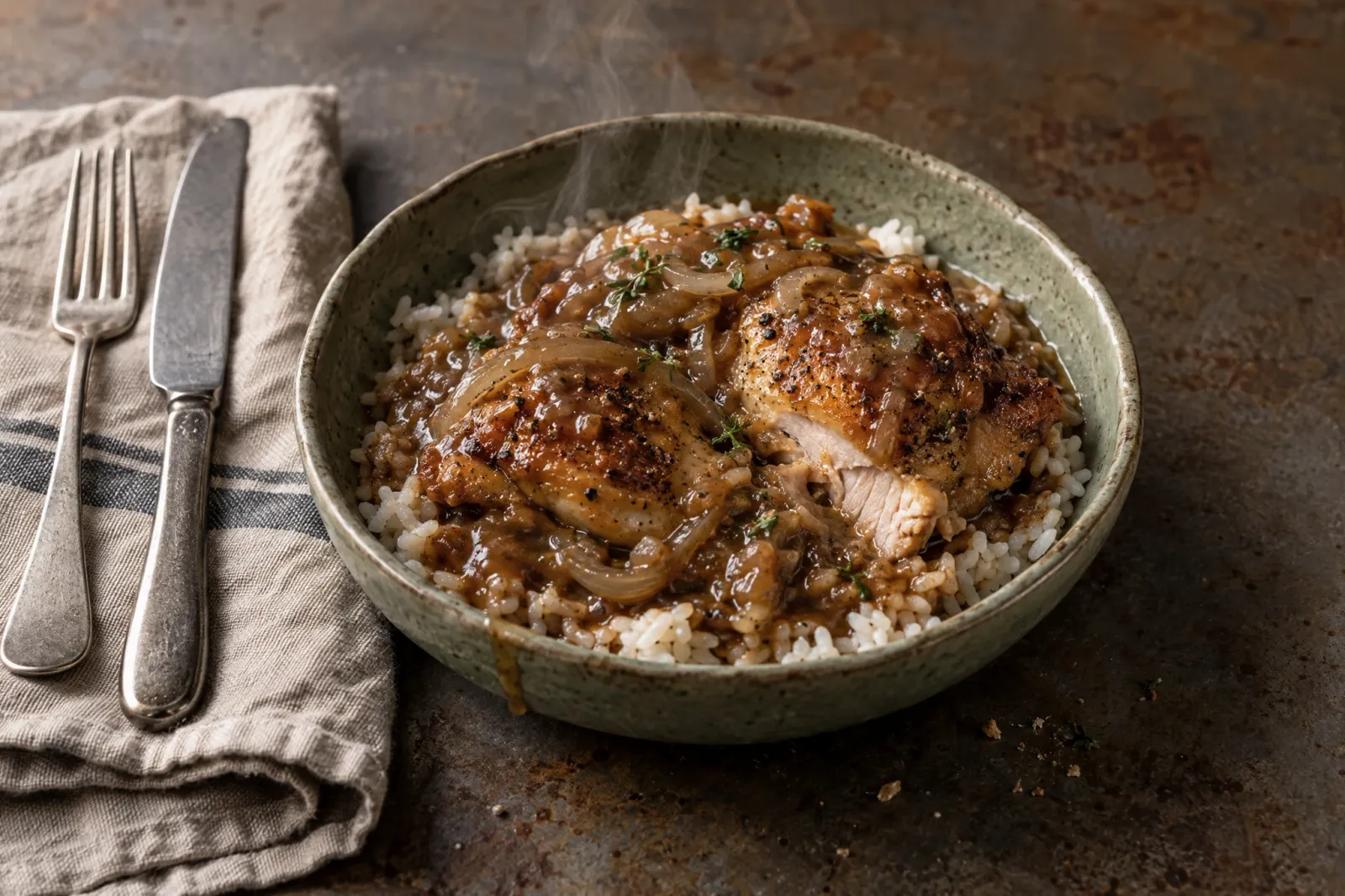
Smothered chicken and rice braises chicken thighs in a rich onion gravy until 165°F, then serves them over fluffy white rice for a Southern one-pot dinner.
The recipe
Researched & sourced- Prep
- 15 mins
- Cook
- 1 hour 15 mins
- Total
- 1 hour 30 mins
- Serves
- 6
- Calories
- 841 kcal
Ingredients
Makes 6 servings
- 3 pounds bone-in, skin-on chicken thighs
- 2 teaspoons kosher salt
- 2 teaspoons ground black pepper
- 1 teaspoon granulated garlic
- 1 teaspoon granulated onion
- 1 teaspoon paprika
- ¼ teaspoon cayenne pepper (optional)
- 2 teaspoons neutral oil, such as vegetable or canola
- 6 tablespoons unsalted butter
- 1 medium yellow onion, sliced
- 6 tablespoons all-purpose flour
- 1 tablespoon chicken bouillon powder, or to taste
- 4 cups low-sodium chicken stock
- 6 cups cooked white rice, for serving
Instructions
- 1
Mix the salt, black pepper, granulated garlic, granulated onion, paprika, and cayenne in a small bowl. Season the chicken on all sides, pulling the skin back to season the meat underneath.
- 2
Heat a large Dutch oven or cast-iron skillet over medium-high heat, then add the oil. Brown the thighs on both sides until deeply golden, then remove them and set aside.
- 3
Melt the butter in the same pot, add the sliced onion, and sauté, scraping up the browned bits, until the onion is softened and translucent.
- 4
Sprinkle in the flour and bouillon powder and whisk into the butter and onions until well combined.
- 5
Gradually whisk in the 4 cups of low-sodium chicken stock, whisking constantly until a smooth gravy forms, then bring to a low boil.
- 6
Return the browned thighs to the pot, cover, and reduce the heat to low. Simmer for 1 hour, stirring occasionally, until the thighs are tender.
- 7
Check for doneness before serving: the internal temperature in the thickest part of a thigh should reach at least 165°F.
- 8
Spoon the chicken and gravy over hot cooked white rice and serve immediately.
Quantities, temperatures, and times are researched from the published sources listed at the bottom of this page — never first-person kitchen tests.
Smothered chicken and rice braises bone-in chicken thighs in a rich onion gravy, then serves them over fluffy white rice for a slow, one-pot Southern dinner. The thighs simmer for 1 hour so the gravy deepens while the meat stays tender and easy to pull from the bone.
What Is Smothered Chicken and Rice?
Smothering is a Southern braising method: the chicken is browned first to build flavor, then braised low and covered in a flour-thickened gravy so it steams and simmers at once. That low, covered cook is the whole point of the 1 hour simmer — the gravy thickens and the meat turns tender without the dry, aggressive heat of a baked casserole.
This is not a creamy baked casserole. The chicken and gravy cook together on the stovetop, then get spooned over white rice that has been cooked separately, so the rice stays fluffy instead of drinking up the sauce. The recipe makes 6 servings and lands at about 841 calories per serving, though that figure is an estimate from a comparable bone-in smothered chicken and rice recipe and will shift with thigh size, gravy, and rice portion.
Bone-In Thighs vs. Boneless Cuts
Why bone-in, skin-on thighs
Bone-in, skin-on thighs are the workhorse of this dish because the bone and skin carry the meat through a long, low braise without drying it out. This recipe starts with 3 pounds of them, and the connective tissue breaks down slowly in the covered pot so the meat stays moist all the way to the finish line.
A smaller batch scales down cleanly. Little Black Skillet’s version uses 4 bone-in, skin-on chicken thighs, which brown in the same pot and braise in less gravy while keeping the same tender result.
Swapping to boneless thighs or breasts
Boneless cuts trade some of that insurance for speed. Easy Family Recipes builds a similar smothered chicken and rice from 2 pounds of boneless, skinless chicken breast, which cooks through much faster than bone-in thighs. If you swap to boneless thighs or breasts, keep the browning step, then check the temperature early and shorten the simmer so the leaner meat does not turn stringy.
Building the Gravy: Roux, Cream, or Slurry
The gravy is what makes smothered chicken feel smothered, and the top recipes take three different routes to the same bowl. Each one behaves differently when it goes wrong, so the choice is less about taste and more about how much attention the pot needs.
| Thickener | How the gravy is built | What can go wrong |
|---|---|---|
| Flour-and-butter roux | Butter and flour cooked into a paste, then loosened with 4 cups stock | Tastes raw if the flour is not cooked first |
| Heavy cream | Dairy added directly; one version uses 1.5 cups | Can separate or curdle over high heat |
| Cornstarch slurry | Starch whisked into cold water, then stirred in at the end | Turns gluey if over-reduced |
Flour-and-butter roux
This recipe builds its gravy on a flour-and-butter roux. Cook the butter and flour together first so the raw taste cooks out, then whisk in the stock a little at a time. The full batch needs 4 cups of low-sodium chicken stock to reach a spoonable consistency that can hold the chicken through the long braise.
Broth-only versions run thinner. Chelsea’s Messy Apron, for example, uses just 2 cups of chicken broth, which produces a lighter sauce than the roux-thickened classic. If you prefer that looser texture, cut the flour back a little and let the gravy reduce to the thickness you want.
Cream-based gravy
A creamier route skips the flour and leans on dairy. Easy Family Recipes uses 1.5 cups of heavy cream to give its smothered chicken a silky finish. The trade-off is stability: cream gravies are more likely to separate if the pot gets too hot or the sauce is reheated hard, which is why this recipe stays with the roux.
Cornstarch slurry
A cornstarch slurry is the quickest fix when a gravy turns out thin. Whisk a little cornstarch into cold water, then stir it into the simmering gravy near the end. It tightens fast, so add it in small amounts — over-reducing a slurry turns the gravy gluey rather than silky, and there is no easy way to undo that.
Food Safety: The 165°F Rule
The USDA sets the safe minimum internal temperature for poultry at 165°F. The three recipe sources this article draws from all point at the same target — Cooks With Soul says at least 165°F, Little Black Skillet checks the thickest part of the thigh for 165°F, and Easy Family Recipes calls for 165°F internal temp — so this recipe treats the thermometer, not the timer, as the finish line.
A thermometer beats the clock because a low, covered simmer does not heat every thigh at the same rate. Pot size, thigh size, and how tightly the lid fits all change the timing, so checking the thickest part of the thigh with an instant-read thermometer is the only way to know the meat has crossed 165°F.
Letting the thighs rest in the gravy after they come off the heat finishes the job. Carryover cooking pushes the meat through its last few degrees while the juices settle back in, so the 1 hour simmer and a quick temperature check work together rather than competing.
Storage and Reheating
Leftovers follow the USDA’s two-step rule. Refrigerate the chicken and gravy within 2 hours of cooking, and plan to eat them within 3 to 4 days.
Freezing is where the sources split. Flour-thickened roux gravies freeze and reheat better than cream-based ones, because dairy gravies can separate as they thaw. Easy Family Recipes warns that its creamy version does not freeze well, while the USDA’s general leftover guidance says cooked food can be kept frozen for 3 to 4 months. For this roux-based gravy, freeze the chicken and gravy separately from the rice, then reheat gently and whisk to bring the sauce back together.
Variations and Swaps
Smothered chicken and rice bends around what is in the pantry without losing the braise-and-gravy core.
- Chicken breasts: swap in 2 pounds of boneless, skinless chicken breast and cut the simmer back so the leaner meat does not overcook.
- Smaller batch: use 4 bone-in, skin-on thighs for a tighter portion with a little less gravy.
- Dairy-free: keep the flour roux and use a neutral oil or plant-based butter in place of the butter.
- Mushroom: add sliced mushrooms with the onion and let them brown in the fat before the flour goes in.
- Cajun: bump up the cayenne and paprika, or stir in a Cajun seasoning blend with the spice mix.
For another one-pot dinner idea, try the healthy one-pot lentil pasta, and for a silky sauce to spoon over pasta night, see the homemade Alfredo sauce. Browse the dinner recipes hub for more weeknight mains.
Frequently asked questions
Can I use boneless, skinless chicken thighs or breasts?
Yes, both work. Boneless, skinless cuts cook through faster than bone-in thighs, so check the temperature a little earlier and stop once the meat is tender. Easy Family Recipes builds the same dish from 2 pounds of boneless, skinless chicken breast. Keep the 165°F target the same, since boneless cuts still need to reach the USDA's safe poultry temperature.
How do I know the chicken is safely cooked through?
Check the thickest part of a thigh with an instant-read thermometer; the USDA sets the safe minimum internal temperature for poultry at 165°F. Timing is only a guide, because a low, covered simmer heats different thighs at different rates. The thermometer is what confirms the meat is safe to eat.
Why did my gravy turn out thin or lumpy — and how do I fix it?
A thin gravy needs more reduction time, or a little extra flour-and-butter roux whisked in at the end. If it turns lumpy, whisk hard or strain it through a fine-mesh sieve. If a cream-based gravy separates, lower the heat and whisk in a splash of stock. Gravy is easiest to rescue before the chicken goes back in, so build the roux slowly.
Does smothered chicken and rice freeze well?
Flour-thickened roux gravies freeze and reheat better than cream-based ones, because dairy gravies can separate as they thaw. The USDA's general leftover guidance says cooked food can be kept frozen for 3 to 4 months. Freeze the chicken and gravy separately from the rice, then reheat gently and whisk to bring the sauce back together.
How long do leftovers keep in the fridge?
Leftovers keep in the refrigerator for 3 to 4 days, and they should go back in the fridge within 2 hours of cooking. Store the chicken and gravy separately from the rice when you can, so the rice does not soak up all the sauce.
Sources
- https://cookswithsoul.com/southern-smothered-chicken-and-gravy/
- https://littleblackskillet.com/the-best-southern-smothered-chicken-thighs-with-rice/
- https://www.chelseasmessyapron.com/smothered-chicken-and-rice/
- https://easyfamilyrecipes.com/creamy-smothered-chicken-and-rice/
- https://amberskitchencooks.com/smothered-chicken-thighs/
- https://www.fsis.usda.gov/food-safety/safe-food-handling-and-preparation/food-safety-basics/doneness-versus-safety
- https://www.fsis.usda.gov/food-safety/safe-food-handling-and-preparation/food-safety-basics/leftovers-and-food-safety