Classic Chicken Pot Pie with a Flaky Double Crust
 By Amara Okafor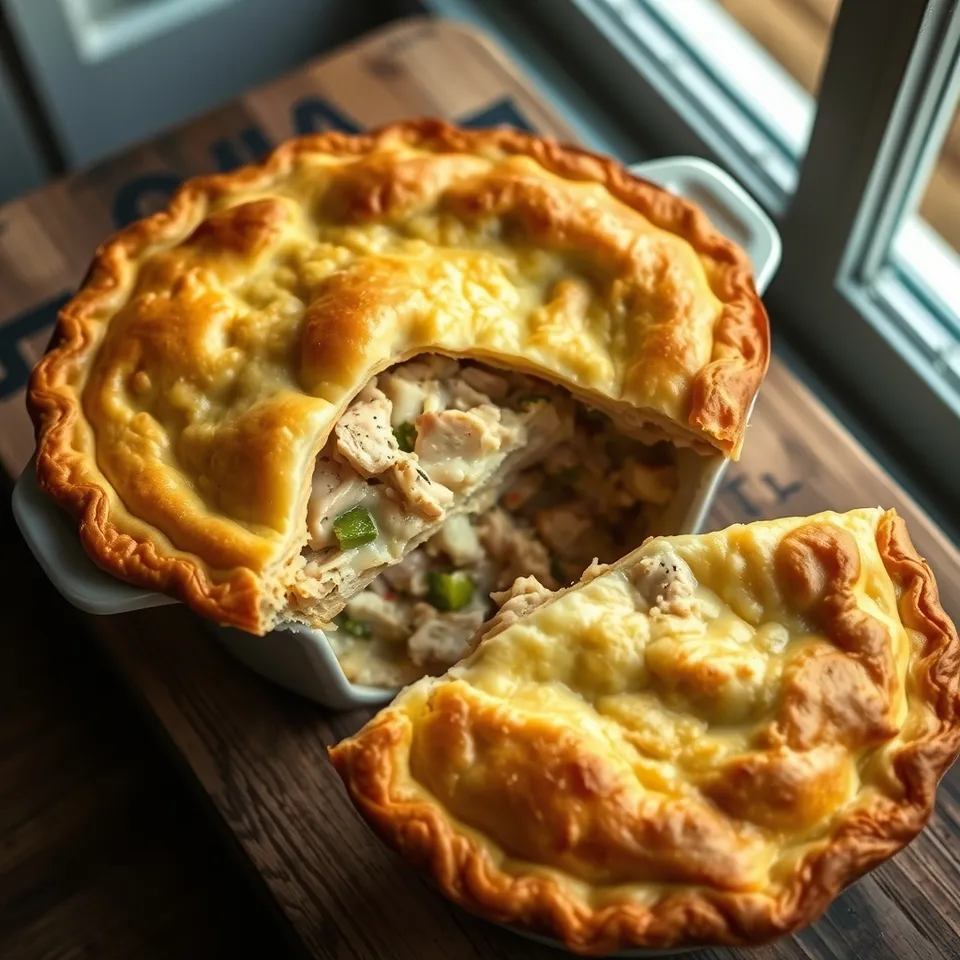
This classic chicken pot pie bakes a creamy from-scratch filling of chicken and vegetables in a flaky double crust, with food-safe times and temperatures.
The recipe
Researched & sourced- Prep
- 25 mins
- Cook
- 40 mins
- Total
- 1 hour 5 mins
- Serves
- 6
- Calories
- 560 kcal
Ingredients
Makes 6 servings
- 1 box (14.1 oz) refrigerated pie crusts (2 count), softened
- 1/3 cup (75 g) unsalted butter
- 1/3 cup chopped yellow onion
- 1/3 cup (40 g) all-purpose flour
- 1/2 teaspoon salt
- 1/4 teaspoon black pepper
- 1 teaspoon dried thyme
- 1 3/4 cups (420 ml) chicken broth
- 2/3 cup (160 ml) half-and-half
- 2 1/2 cups shredded cooked chicken or turkey
- 2 cups frozen mixed vegetables (peas, carrots, corn, green beans), thawed
- 1 large egg + 1 tablespoon milk, for egg wash
Instructions
- 1
Heat the oven to 425°F.
- 2
Soften the pie crusts on the counter for about 15 minutes, then press one crust firmly into an ungreased 9-inch glass pie plate that's 1.5 to 2 inches deep.
- 3
In a saucepan over medium heat, melt the butter and cook the onion, stirring, until tender.
- 4
Whisk in the flour, salt, pepper, and thyme and cook for 1 minute to cook out the raw flour.
- 5
Gradually whisk in the chicken broth and half-and-half, cooking and stirring until the mixture is bubbly and thickened.
- 6
Stir in the cooked chicken and frozen mixed vegetables until combined, then remove from heat.
- 7
Let the filling cool so it will not melt the bottom crust, then spoon it into the crust-lined pie plate.
- 8
Top with the second crust, fold and crimp the edges to seal, and cut a few slits in the top to let steam escape.
- 9
Whisk the egg with 1 tablespoon milk and brush a thin layer over the top crust.
- 10
Bake 15 minutes, then loosely cover the crust edge with foil to prevent over-browning.
- 11
Bake 20 to 25 minutes more, until the top is golden brown and the filling reaches at least 165°F in the center.
- 12
For the single top-crust variation, lower the oven to 375°F and bake 35 to 40 minutes.
- 13
Let stand 5 to 10 minutes before serving so the filling sets.
Quantities, temperatures, and times are researched from the published sources listed at the bottom of this page — never first-person kitchen tests.
Classic chicken pot pie pairs a creamy chicken-and-vegetable filling with a flaky double crust, baked until the center reaches a food-safe 165°F. A roux-thickened gravy, a cooled filling, and a hot oven are the three moves that make it work.
Why This Recipe Works
Chicken pot pie succeeds on a handful of technique decisions, and each one traces to a source rather than a guess. The filling starts as a roux — butter and flour cooked together — so the gravy stays thick and clings to the chicken and vegetables instead of pooling under the crust. A refrigerated crust keeps the method approachable on a weeknight: the pastry is ready to unroll, so the work concentrates on the filling rather than on rolling dough.
The oven runs hot at 425°F, which sets the pastry quickly and steams the interior while the edges brown. The finish is measured, not visual: the filling should reach at least 165°F in the center, the same safe minimum the USDA lists for all poultry. In practice this means the pie reads as comfort food but is built like any other sauce-based dinner — control the thickener, cool before you assemble, and take the temperature before you slice.
Cooling matters as much as heat. Chilling the cooked filling for at least 30 minutes before it meets the dough keeps the bottom crust crisp, because a hot filling melts the fat in the pastry and turns the base soggy. If you are planning a bigger weeknight spread, this pairs naturally with a creamy homemade Alfredo sauce or a quick 15-minute tomato basil pasta.
How to Thicken the Filling (and Fix It)
Flour is the thickener. This recipe cooks 1/3 cup of all-purpose flour into melted butter to build a roux, then whisks in 1 3/4 cups of chicken broth and 2/3 cup of half-and-half until the mixture bubbles and thickens. Whisking the liquid in gradually, rather than all at once, is what keeps the gravy smooth and lump-free. The roux does the heavy lifting: cooking the flour in the butter for a minute removes the raw, pasty taste before the liquid goes in, and the broth then loosens the paste into a sauce while the half-and-half rounds out the richness. The mixture should come to a gentle bubble and visibly coat the back of a spoon before the chicken and vegetables are stirred through.
If the sauce comes out too thin, keep it at a gentle bubble to cook off excess liquid, or stir in a slurry of 1 tablespoon cornstarch dissolved in 2 tablespoons of cold water. Too thick is easier to fix: whisk in a splash of broth a little at a time until the filling loosens. Because the sauce contains dairy, hold it at a gentle simmer rather than a hard boil so the half-and-half does not separate. If the sauce does break — a grainy or separated look when the dairy gets too hot — whisking hard over low heat, or adding a spoonful of cold broth, can help pull it back together.
Avoiding a Soggy Bottom Crust
Glass vs. metal dish
Use a 9-inch glass pie plate. Glass conducts heat more slowly than metal and lets the bottom crust brown before the filling steams it, which is why the recipe specifies an ungreased 9-inch glass plate. Depth helps too: a 9-inch dish that is 1.5 to 2 inches deep leaves room for the filling without overflowing at the crimp. The material distinction matters because the two surfaces move heat at different speeds — metal browns the base faster but can overbake it, while glass builds color more gradually, which suits a thick filling that needs the full bake time to reach temperature.
Cooling the filling
Cooling the filling is the most reliable defense against a soggy base. Chilling the cooked filling for at least 30 minutes before assembling means it no longer melts the fat in the bottom crust, so the dough can bake crisp instead of steaming soft. The slits cut into the top crust are not decoration, either: they vent steam so it does not collect under the pastry and soften the very layer you worked to protect.
Single top-crust option
For a lighter version with only a top crust, lower the oven to 375°F and bake 35 to 40 minutes. With just one crust to brown, the lower temperature keeps the top from overbaking while the filling heats through. The filling and its cooling step stay the same; only the second crust and the oven setting change.
Ingredient Swaps and Variations
Cooked chicken quantities
Leftover or rotisserie chicken swaps in directly. This recipe uses 2 1/2 cups of shredded cooked chicken or turkey. Other sources vary on the amount: Sally’s Baking Addiction works from 1 pound of raw boneless chicken, Pioneer Woman calls for 3 cups of cooked chicken, and RecipeTin Eats uses 600 g (1.2 lb). Sticking close to that measure keeps the filling coated without going dry. Turkey is a one-for-one stand-in, which is why the recipe lists it alongside chicken; if you are using a rotisserie bird, pull it into bite-size shreds and measure after picking so the ratio stays right.
Vegetable swaps
Frozen mixed vegetables are the workhorse, 2 cups thawed. Any combination of thawed frozen peas, diced carrots, corn, or green beans works in the same total amount. Fresh diced carrots and celery are fine too, but cook them in the butter until tender first so they do not stay crunchy. Frozen vegetables keep their bite better when they are stirred in just to warm, rather than simmered for the whole cook.
Crust alternatives
The recipe uses one box of refrigerated pie crusts, a 2-count package. A from-scratch all-butter or shortening crust works as the double crust and will change the flavor and the nutrition totals. For a biscuit-style top, drop spoonfuls of prepared biscuit dough over the filling and bake until golden. A splash of heavy cream in place of some half-and-half makes the gravy richer, though it will shift the per-serving numbers.
Storage, Reheating, and Freezing
Refrigerator
Refrigerate leftovers within 2 hours of serving to prevent food-borne illness, and keep them for 3 to 4 days. The FDA sets the same 2-hour limit for perishables, dropping to 1 hour when the room is above 90°F, and advises keeping the refrigerator at 40°F or below. The published fridge windows overlap in practice — most recipe sources land between three and five days — but the two-hour route to the refrigerator is the part that never changes.
Freezer
Freezing is where sources disagree. If you do freeze, do it unbaked: Taste Better From Scratch says the pie keeps for up to 3 months in the freezer, and the FDA notes the freezer should run at 0°F. Freezing before baking, then baking from frozen, avoids the soggy crust a baked pie develops when it thaws. Assemble the pie, wrap it tightly so air does not dry the dough, and skip the egg wash until it is ready to bake.
Reheating
Reheat until the filling reaches at least 165°F in the center, the safe temperature the USDA lists for leftovers. Pioneer Woman suggests a 350°F oven for about 20 minutes to crisp the crust, though a thermometer in the filling is the real check. Cover the pie if the top threatens to over-brown, and let it rest a few minutes before slicing so the gravy sets and holds its shape on the plate.
Frequently asked questions
What is the sauce made of in chicken pot pie?
The sauce is a roux-thickened gravy of butter, all-purpose flour, chicken broth, and half-and-half. This recipe whisks 1 3/4 cups of broth and 2/3 cup of half-and-half into a cooked flour-and-butter base until the mixture bubbles and thickens. Adding the liquid gradually keeps it smooth instead of lumpy.
How do I keep the bottom crust from getting soggy?
Use a glass pie plate, cool the filling before assembling, and bake hot. The recipe directs a 9-inch glass pie plate, and chilling the filling for at least 30 minutes stops it from melting the fat in the bottom crust. Baking at 425°F also sets the base quickly so it steams less.
Can I make chicken pot pie with only a top crust?
Yes. Bake the filling in a dish with just a top crust, lowering the oven to 375°F because there is only one crust to brown. Sally's Baking Addiction recommends a 35 to 40 minute bake at that temperature, while the double-crust version here uses 425°F.
How long does chicken pot pie last in the fridge, and how do I reheat it?
Refrigerate leftovers within 2 hours of serving and keep them for 3 to 4 days. Reheat until the filling reaches at least 165°F in the center, the safe temperature the USDA lists for leftovers. Cover the pie so the crust stays moist while the center warms.
Can I freeze chicken pot pie?
Yes, but freeze it unbaked for the best crust. Taste Better From Scratch says the pie keeps for up to 3 months in the freezer, and the FDA notes the freezer should run at 0°F. Bake straight from frozen, adding time until the filling reaches 165°F.
Sources
- https://tastesbetterfromscratch.com/chicken-pot-pie/
- https://www.pillsbury.com/recipes/classic-chicken-pot-pie/1401d418-ac0b-4b50-ad09-c6f1243fb992
- https://sallysbakingaddiction.com/double-crust-chicken-pot-pie/
- https://www.thepioneerwoman.com/food-cooking/recipes/a11686/pot-pie/
- https://www.recipetineats.com/chicken-pot-pie/
- https://www.fsis.usda.gov/food-safety/safe-food-handling-and-preparation/food-safety-basics/safe-temperature-chart
- https://www.fda.gov/food/buy-store-serve-safe-food/refrigerator-thermometers-cold-facts-about-food-safety