Easy Teriyaki Chicken with Homemade Sauce
 By Marcus Chen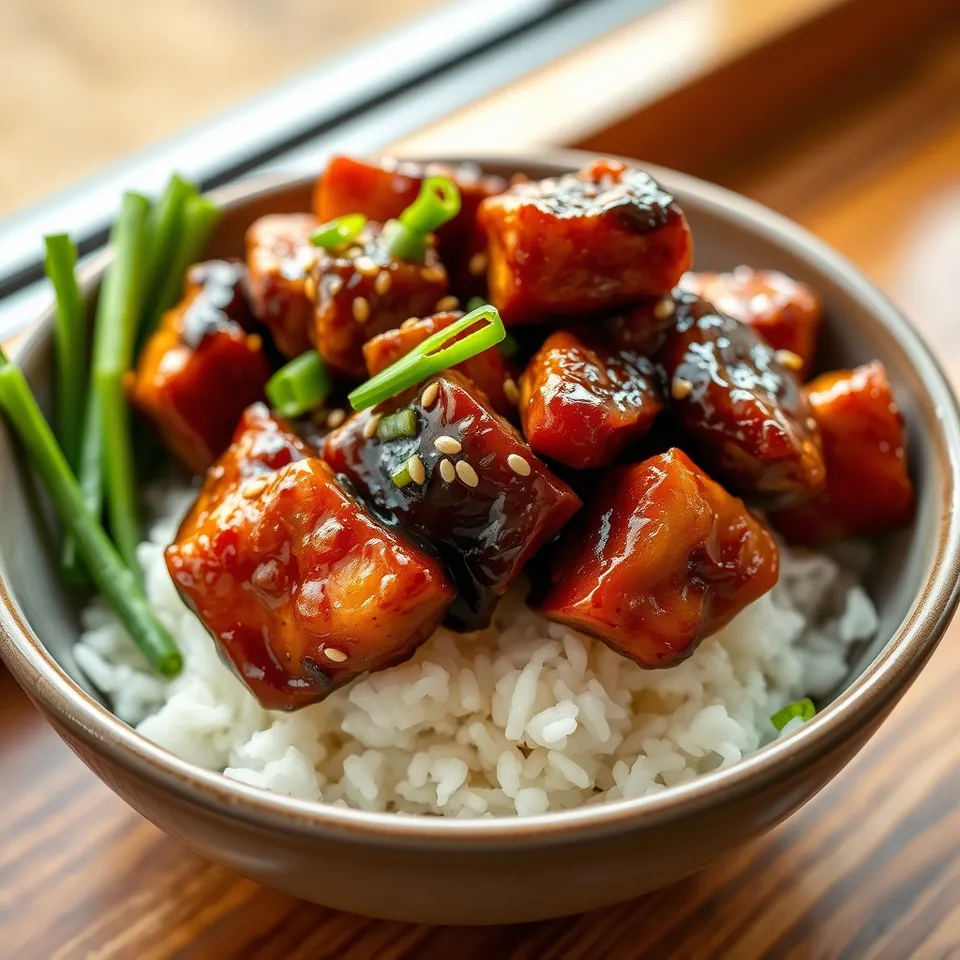
Seared teriyaki chicken in a glossy homemade sauce of soy, mirin, honey, and ginger — a weeknight dinner with USDA-backed doneness and storage guidance.
The recipe
Researched & sourced- Prep
- 10 mins
- Cook
- 10 mins
- Total
- 20 mins
- Serves
- 4
- Calories
- 258 kcal
Ingredients
Makes 4 servings
- 1 1/4 lbs (570 g) boneless skinless chicken breasts, cut into 1-inch cubes
- 1/4 cup low-sodium soy sauce
- 2 Tbsp mirin (Japanese sweet rice wine)
- 2 Tbsp honey
- 1 1/2 Tbsp packed light brown sugar
- 1 Tbsp rice vinegar
- 2 tsp peeled, minced fresh ginger
- 2 tsp peeled, minced fresh garlic (about 2 cloves)
- 2 tsp cornstarch
- Neutral cooking oil, for the pan
- Sesame seeds and sliced green onions, for serving (optional)
Instructions
- 1
Whisk the low-sodium soy sauce, mirin, honey, brown sugar, rice vinegar, ginger, garlic, and cornstarch in a small bowl until the cornstarch dissolves.
- 2
Heat a thin film of neutral oil in a 12-inch non-stick skillet over medium-high heat until shimmering.
- 3
Add the chicken in a single layer and cook, without moving it, until browned on the underside.
- 4
Flip the pieces and continue cooking until the thickest pieces register about 160°F (71°C), about 3 minutes longer.
- 5
Pour the sauce into the skillet and toss until it thickens and turns glossy, coating the chicken.
- 6
Confirm the chicken has reached 165°F (74°C) — the safe minimum internal temperature for poultry — then remove from the heat.
- 7
Serve immediately over steamed rice, garnished with sesame seeds and sliced green onions.
Quantities, temperatures, and times are researched from the published sources listed at the bottom of this page — never first-person kitchen tests.
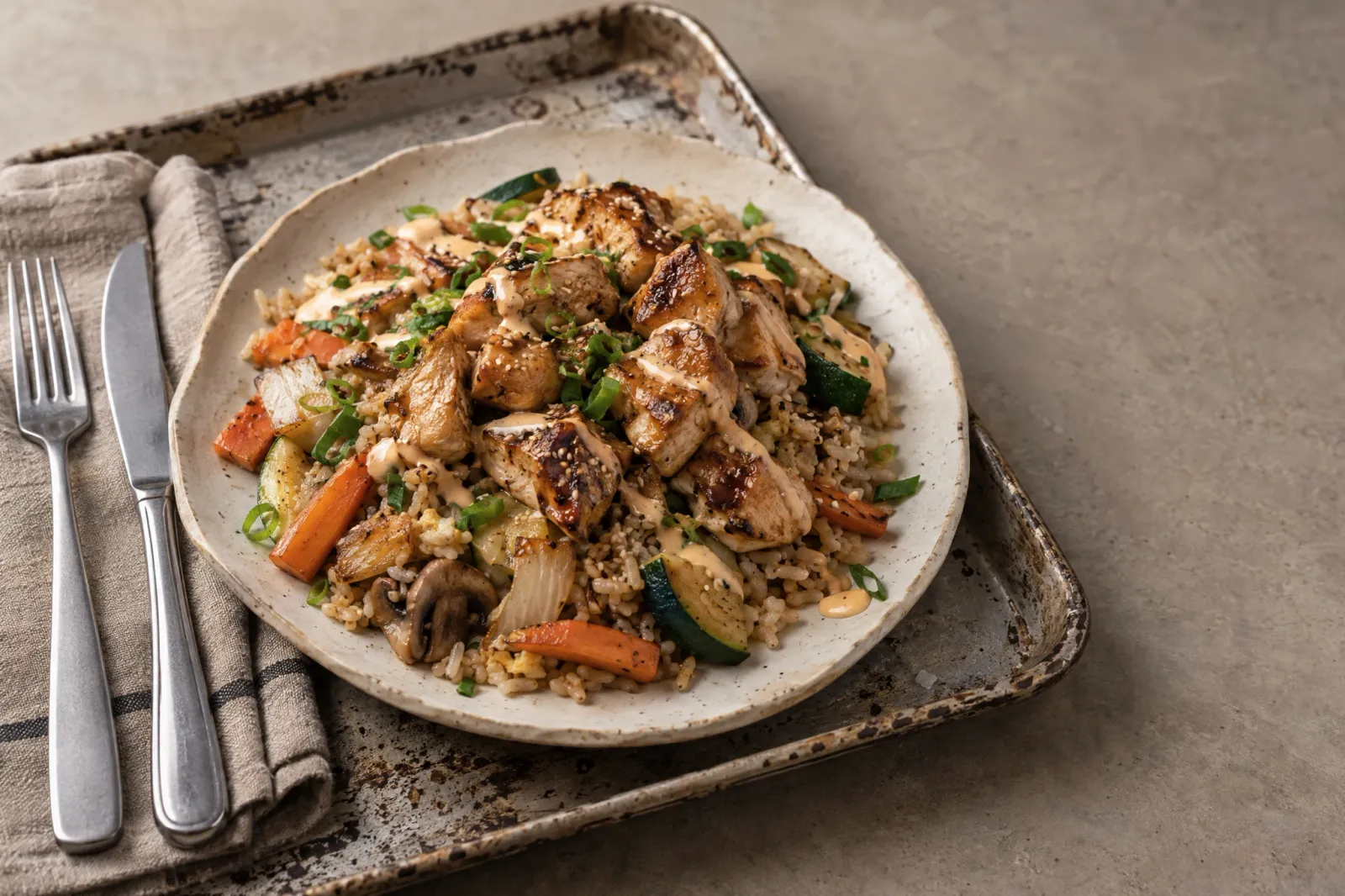
Teriyaki chicken is bite-size chicken seared in a hot pan and finished in a glossy, sweet-savory glaze — a takeout-style dinner built on a from-scratch sauce rather than a bottle. It is ready when the chicken reaches 165°F, the safe minimum for poultry.
What Is Teriyaki Chicken?
Teriyaki is a Japanese cooking method before it is a bottled sauce. The name breaks into two parts: teri means the luster that comes from the shiny glaze, and yaki means to broil, grill, or pan-fry. The method was established in Japan in the 1600s, and the gloss is the whole point — the glaze is meant to cling to the food and shine, not pool in the pan.
The Teriyaki Sauce, Two Ways
The sauce is where the top results split into two schools, and knowing the difference is what makes the recipe adaptable. This recipe blends the two: it follows the American takeout technique but swaps mirin into the sauce for a more Japanese character.
The Japanese 2:2:2:1 base
The classic Japanese base is lean and savory. Just One Cookbook’s teriyaki sauce is two parts soy sauce, two parts sake, two parts mirin, and one part sugar — a 2:2:2:1 ratio — which works out to 2 tablespoons of soy sauce, 2 tablespoons of sake, 2 tablespoons of mirin, and 1 tablespoon of sugar. There is no cornstarch; the glaze turns glossy and syrupy purely from the sugar caramelizing in the hot pan.
The American takeout style
The American takeout version is sweeter and thicker, built to cling to a weeknight dinner. Cooking Classy’s sauce — the model for this recipe — combines 1/4 cup of low-sodium soy sauce, 2 tablespoons of honey, 1 1/2 tablespoons of packed light brown sugar, 1 tablespoon of rice vinegar, and 2 teaspoons of cornstarch. The honey and brown sugar carry the sweetness, the vinegar adds tang, and the cornstarch thickens the sauce quickly so it coats every piece of chicken.
| Japanese 2:2:2:1 base | American takeout style | |
|---|---|---|
| Soy | 2 Tbsp | 1/4 cup low-sodium |
| Sweetener | 1 Tbsp sugar | 2 Tbsp honey + 1 1/2 Tbsp brown sugar |
| Thickener | none (pan glaze) | 2 tsp cornstarch |
| Rice wine / acid | 2 Tbsp sake + 2 Tbsp mirin | 1 Tbsp rice vinegar |
Substituting mirin and sake
Mirin and sake are the two rice wines that give Japanese teriyaki its depth, and both are easy to work around. This recipe uses 2 tablespoons of mirin and no sake, which puts it between the Japanese base and the American takeout style. My Korean Kitchen uses a heavier hand, with 4 tablespoons of mirin and 3 tablespoons of sake, plus 1/4 cup of soy sauce and 2 tablespoons of brown sugar.
If mirin is missing, the honey and brown sugar in this recipe already provide the sweetness, so the sauce still glazes; a splash of a sweet white wine or dry sherry can stand in for the mirin’s fruity note. For sake, an equal amount of a dry white wine or a little extra rice vinegar works, since sake’s job is mainly to round out the salt.
Chicken Breasts vs Thighs
How each cut cooks
This recipe uses chicken breasts, and the cut shapes the timing. It calls for 1 1/4 pounds (570 g) of boneless, skinless chicken breasts cut into 1-inch cubes, which sear quickly and stay moist only if they are pulled at the right temperature. Thighs are the more forgiving choice: Budget Bytes builds its version on 1.75 pounds of boneless, skinless thighs, and Just One Cookbook uses 3/4 to 1 pound. Thighs stay tender at a higher internal temperature, which gives the cook more room to sear.
Timing and temperature by cut
The timing shifts with the cut. This recipe sears the cubed breast until the thickest pieces register about 160°F, about 3 minutes after the first flip. The Girl Who Ate Everything cooks whole or cubed thighs for 4 to 6 minutes per side until they reach 165°F. Just One Cookbook’s thigh version sears for 5 minutes, then covers the pan and steams for 3 minutes on low heat. Each method arrives at the same safety floor of 165°F, just by a different route.
| Chicken breast (this recipe) | Chicken thighs | |
|---|---|---|
| Amount | 1 1/4 lbs, 1-inch cubes | 1.75 lbs boneless skinless |
| Sear target | about 160°F, then glaze | 4-6 min per side to 165°F |
| Tenderness | pull at 165°F | up to 175°F |
Do You Need to Marinate?
Marinating times that work
This recipe glazes the chicken at the end and does not call for a marinade, which is the faster route and keeps the sugar from burning on the surface. A marinade is optional: it pushes flavor deeper, but the sugar in the sauce can scorch before the inside cooks through. The sugar is exactly why a long, sugary marinade can burn — in the Japanese 2:2:2:1 base it is one part sugar to two parts each of soy, sake, and mirin.
When the published recipes do marinate, the times settle into a useful range. RecipeTin Eats says to marinate for at least 20 minutes, preferably overnight. Kinder’s recommends 30 minutes to 1 hour in the refrigerator, while Budget Bytes allows 30 minutes to 24 hours and The Girl Who Ate Everything gives 15 minutes to 24 hours. For cubed chicken, 20 minutes is enough; longer is optional, not required.
Food Safety & Doneness
The sourced safe minimum
The safety target for teriyaki chicken is unambiguous. FoodSafety.gov lists 165°F (74°C) as the safe minimum internal temperature for all poultry, including breasts, legs, thighs, and wings. This recipe reaches it in two steps: sear the chicken to about 160°F, then pour in the sauce and let the heat carry it to the final 165°F. Glazing at that lower temperature keeps the sugar from scorching while the meat finishes cooking.
Thighs are the one nuance. Budget Bytes cooks thighs to 175°F, which is above the safety floor but gives the connective tissue time to turn tender; the same recipe states that chicken is safe once it reaches 165°F. Kinder’s recipe likewise directs an internal temperature of at least 165°F. So 165°F is the floor for every cut, and cooking thighs higher is a texture choice, not a safety requirement.
Storage & Reheating
Fridge, freezer, and the sauce
Leftovers keep well, though the published windows differ slightly. The Country Cook stores leftovers in an airtight container for 4 to 5 days in the refrigerator and freezes them for up to 3 months. Just One Cookbook gives a shorter 3 days in the fridge and about a month in the freezer. A few days in the refrigerator is the safe, simple choice; freeze in portions for anything longer.
The sauce lasts longer than the cooked chicken. RecipeTin Eats says the teriyaki marinade keeps in the fridge for 3 weeks in an airtight container. When reheating, bring the chicken back to 165°F, the safe minimum for reheated leftovers.
For another skillet chicken dinner in the same lane, try hibachi chicken, or browse more Asian recipes and dinner recipes.
Frequently asked questions
Can I use chicken breasts instead of thighs?
This recipe is built on 1 1/4 pounds of boneless, skinless chicken breasts, and boneless, skinless thighs swap in one-for-one. Thighs are the more forgiving cut and stay tender up to 175°F, while breasts are best pulled right at the 165°F safe minimum so they stay moist.
Why is my teriyaki sauce thin or not glossy?
A thin teriyaki sauce usually means the cornstarch was not fully whisked in or the sauce did not simmer long enough to thicken. This recipe uses 2 teaspoons of cornstarch, which needs a brief simmer once it hits the pan to turn glossy and cling to the chicken. Cook the sauce a little longer and it will thicken; leave the cornstarch out and it stays thin like the Japanese 2:2:2:1 base.
What can I substitute for mirin or sake?
Mirin and sake are both easy to substitute. This recipe calls for 2 tablespoons of mirin, which can be replaced with a sweet white wine or dry sherry plus a little sugar for its fruity sweetness. For sake, a dry white wine or a splash of rice vinegar works, since sake mainly rounds out the salt; the sauce still glazes because the honey and brown sugar carry the sweetness.
Do I need to marinate teriyaki chicken?
A marinade is optional for teriyaki chicken. This recipe glazes the chicken at the end instead, which is faster and keeps the sugar in the sauce from scorching on the pan. If deeper flavor is wanted, the published times range from 20 minutes to 24 hours, and a 20-minute soak is enough for bite-size pieces.
How do I know when the chicken is safely cooked?
Check the internal temperature at the thickest piece of chicken. The safe minimum for all poultry is 165°F (74°C), so remove the chicken once it reaches that temperature. This recipe sears the chicken to about 160°F before adding the sauce, then confirms the final 165°F so the glaze does not burn while the center finishes.
Sources
- https://www.foodsafety.gov/food-safety-charts/safe-minimum-internal-temperatures
- https://www.cookingclassy.com/teriyaki-chicken/
- https://www.kinders.com/recipes/teriyaki-chicken-bowl
- https://www.thecountrycook.net/fast-easy-chicken-teriyaki/
- https://www.the-girl-who-ate-everything.com/teriyaki-chicken/
- https://www.recipetineats.com/teriyaki-chicken/
- https://mykoreankitchen.com/teriyaki-chicken/
- https://www.budgetbytes.com/easy-teriyaki-chicken/
- https://www.justonecookbook.com/chicken-teriyaki/