Coq au Vin (Chicken Braised in Red Wine)

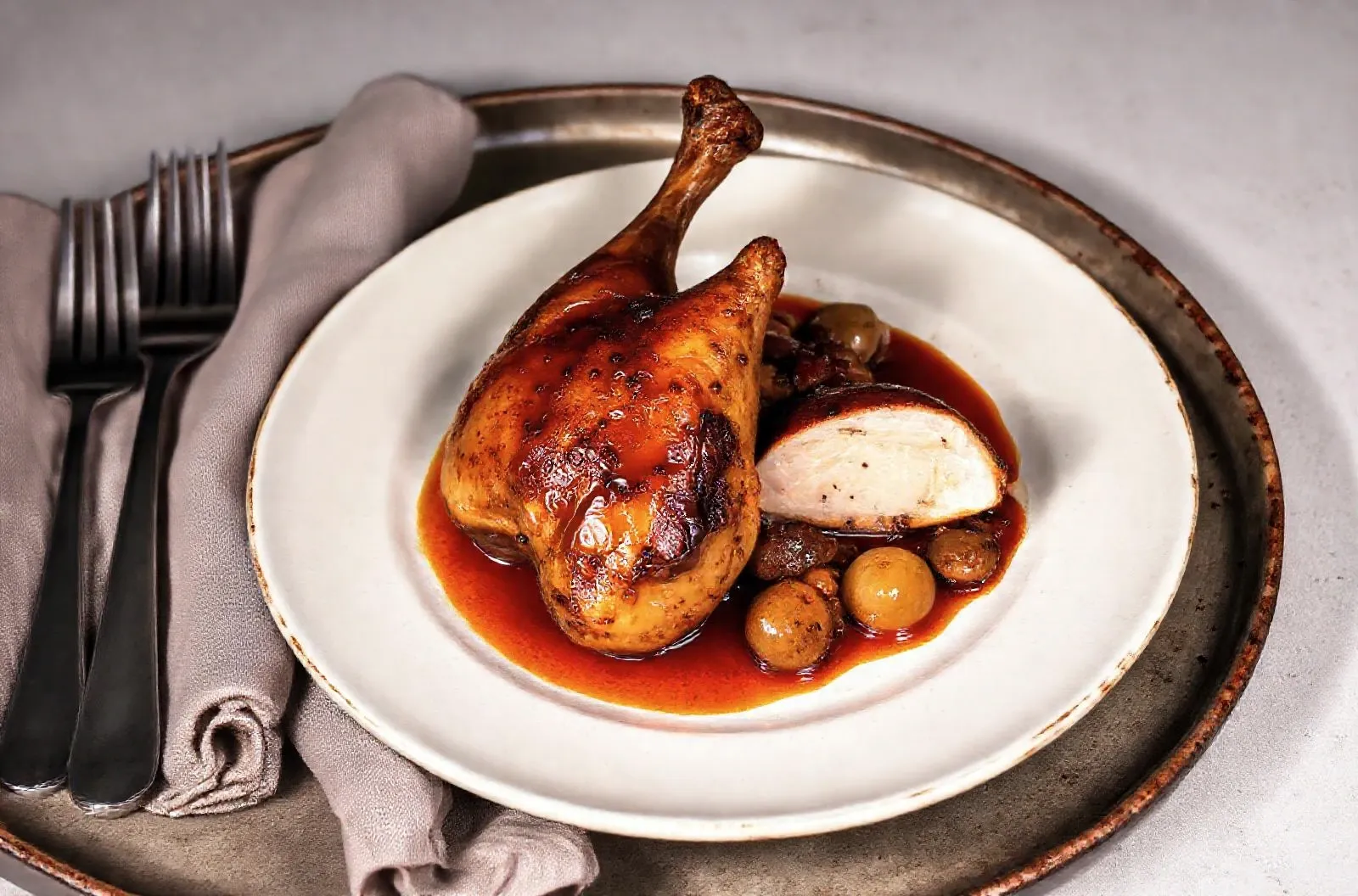
Bone-in chicken braised in a glossy red wine sauce with bacon, mushrooms, and pearl onions. An authentic coq au vin recipe with clear step-by-step timing.
The recipe
Researched & sourced- Prep
- 15 mins
- Cook
- 1 hour 30 mins
- Total
- 1 hour 45 mins
- Serves
- 4
- Calories
- 977 kcal
Ingredients
Makes 4 servings
- 4 bone-in, skin-on chicken thighs (about 220 g / 7 oz each)
- 4 chicken drumsticks
- 750 ml (3 cups) pinot noir, or another dry red wine
- 16 pearl onions (or 2 brown onions, cut into wedges), peeled
- 1 bay leaf, fresh or dried
- 3 thyme sprigs (or 1 tsp dried thyme)
- 400 g (14 oz) white mushrooms, halved (quartered if large)
- 150 g (5 oz) bacon, cut into 1 x 2.5 cm (0.4 x 1 in) lardons
- 60 g (4 tbsp) unsalted butter
- 3 garlic cloves, finely minced
- 2 tbsp tomato paste
- 7 tbsp all-purpose flour
- 750 ml (3 cups) beef stock, low sodium, preferably homemade
- 3 tbsp vegetable or canola oil, for browning
- Salt and freshly ground black pepper, to taste
- 2 tbsp fresh parsley, chopped, to garnish
Instructions
- 1
Place the 4 chicken thighs, 4 drumsticks, 16 pearl onions, bay leaf, and thyme in a large glass or ceramic bowl and pour over the 750 ml (3 cups) pinot noir. Cover and refrigerate 12 to 24 hours.
- 2
Strain the wine into a saucepan, set the chicken, onions, and herbs aside, and simmer the wine over medium-high heat, skimming as needed, until reduced by half.
- 3
Preheat the oven to 350 °F (180 °C).
- 4
Pat the chicken dry with paper towels and season with salt and pepper.
- 5
Heat the 3 tbsp oil in a large oven-proof pot or Dutch oven (about 5-qt) over medium-high heat and sear the chicken in batches, skin side down, until deeply golden on both sides; transfer to a plate.
- 6
Cook the 150 g (5 oz) bacon in the same pot until golden, then sauté the 400 g (14 oz) mushrooms until golden; transfer both to the plate with the chicken.
- 7
Sauté the drained pearl onions in the remaining fat until golden at the edges; remove to the plate.
- 8
Melt the 60 g (4 tbsp) butter in the pot, add the 3 minced garlic cloves and cook for 1 minute, then stir in the 2 tbsp tomato paste and cook for 2 minutes.
- 9
Sprinkle in the 7 tbsp flour and cook, stirring constantly, for 2 minutes to cook out the raw flour taste.
- 10
Gradually whisk in the 750 ml (3 cups) beef stock until smooth, then stir in the reduced red wine.
- 11
Return the chicken, bacon, mushrooms, onions, bay leaf, and thyme to the pot, bring to a simmer, then cover and transfer to the oven. Braise for 45 minutes, until the chicken reaches 165 °F at the thickest part.
- 12
Remove from the oven and taste the sauce, adding salt as needed. For the deepest flavour, cool and refrigerate overnight, then reheat gently, ensuring the stew reaches 165 °F throughout before serving.
- 13
Serve over mashed potatoes or tagliatelle and sprinkle with chopped parsley.
Quantities, temperatures, and times are researched from the published sources listed at the bottom of this page — never first-person kitchen tests.
Coq au vin braises bone-in chicken in red wine with bacon, mushrooms, and pearl onions until the sauce turns deep and glossy. An overnight wine marinade, a reduced wine, and a slow oven braise set it apart from an ordinary chicken stew.
The Technique Behind Great Coq au Vin
Coq au vin is a braise, not a quick sauté, and three deliberate steps carry its flavour. The chicken soaks in red wine before it ever meets the heat, the wine is reduced to concentrate its fruit and cook off the raw edge, and the pot then braises gently in the oven rather than boiling hard on the stove. It is a cornerstone of French bistro cooking, and each of those steps earns its time.
Marinate the chicken in wine
The chicken and pearl onions go into a bowl with the bay leaf and thyme, then get covered with the pinot noir and refrigerated for 12 to 24 hours. During that time the wine flavours the meat and carries the aromatics into the chicken, so the overnight soak is the step that makes the finished dish taste like more than a quick stew.
Reduce the wine before braising
After the marinade, the wine is strained into a saucepan and simmered until it reduces by half, skimming any foam that rises to the surface. Reducing concentrates the wine’s flavour and removes the raw alcohol taste, so the sauce finishes deep rather than sharp. Once Upon a Chef’s version reaches the same point by bringing the wine to a boil and gently boiling it uncovered for 15 minutes.
Braise low in the oven
The browned pot then braises, covered, in a 350°F oven for 45 minutes, until the chicken reaches 165°F at the thickest part of the meat. A steady, moderate oven keeps the liquid at a gentle simmer so the chicken turns tender without the sauce boiling away. That 165°F target is the USDA’s safe minimum internal temperature for chicken and all poultry.
Ingredients and Smart Substitutions
The ingredient list is short, but every item does a specific job, and most have a clean swap when something is out of reach.
The wine
The recipe calls for 750 ml / 3 cups of pinot noir or another dry red wine. Dry matters more than the specific grape: the sauce is built on the wine’s tannins and acidity, and a sweet or heavily oaked bottle will push the finished sauce out of balance.
The stock
Beef stock is traditional here, and the recipe uses 750 ml / 3 cups of low-sodium beef stock. Chicken stock works just as well for a lighter sauce — Julia Child’s version uses 2 cups of homemade chicken stock, preferably a brown chicken stock.
The chicken
This recipe braises 4 thighs and 4 drumsticks, bone-in and skin-on, because the bones and skin contribute body to the sauce. Other published versions lean on thighs alone: Once Upon a Chef uses 8 bone-in, skin-on thighs (about 4 lbs), and Damn Delicious uses 6 bone-in, skin-on thighs. Julia Child’s classic cuts up a whole chicken of about 3½ to 4½ pounds.
The bacon (or pancetta)
The recipe browns 150 g / 5 oz of bacon cut into small lardons, whose rendered fat seasons the pot before the onions and mushrooms go in. Pancetta is a direct substitute — Once Upon a Chef calls for 4 oz of diced pancetta or bacon, and Julia Child’s recipe uses ½ cup of lardons or thickly sliced bacon.
Oven, Stovetop, or Slow Cooker: Three Ways to Braise
The same braise can happen in three different vessels. The oven is the most even and needs the least attention, the stovetop works when an oven is not available, and the slow cooker turns the dish into a set-and-forget dinner.
| Method | Time | Temperature | Finish |
|---|---|---|---|
| Oven braise | 45 minutes | 350°F | 165°F at the thickest part |
| Stovetop simmer | 40 to 45 minutes | low simmer | 175°F in Damn Delicious’ version |
| Slow cooker | 6 hours on low | low | reduce on the stove to finish |
Oven braise
The oven is the method in the recipe card: a 5-qt Dutch oven or heavy-bottomed pot moves from the stovetop to the oven, where the chicken braises covered at 350°F for 45 minutes.
Stovetop simmer
On the stovetop, Damn Delicious’ version simmers the chicken covered for 40 to 45 minutes, until the meat reaches an internal temperature of 175°F. That 175°F is the recipe’s doneness target, slightly above the USDA’s 165°F safe minimum for poultry.
Slow cooker
RecipeTin Eats offers a slow-cooker path: braise on low for 6 hours, then transfer the stew to a pot and simmer uncovered so the sauce reduces and tightens before serving. This suits cooks who want the marinade done the night before and the cooking largely unattended.
How to Thicken the Sauce
Coq au vin’s sauce should cling to the chicken rather than pool around it, and there are two clean ways to get there: cooking flour into the pot early, or whisking a butter-and-flour paste in at the end.
Flour in the pot
The recipe card cooks 7 tbsp of all-purpose flour into the fat before the stock goes in, forming a roux that thickens the sauce as it braises. This is the more robust route and is built into the main method.
Beurre manié
A beurre manié — softened butter kneaded with flour and whisked into the finished sauce — thickens at the last minute and lets you fine-tune the body. Once Upon a Chef’s version uses 4 tbsp butter and 4 tbsp flour, while The Endless Meal keeps a lighter ratio of 2 tbsp flour and 2 tbsp butter. Reach for it when the sauce has braised but still looks thin.
Storage and Reheating
The finished stew is generous and keeps well, which makes coq au vin a strong make-ahead dish.
Refrigerating
Cooled coq au vin keeps in the refrigerator for 3 to 4 days, per the USDA’s cold storage chart for cooked meat or poultry. Plan the raw ingredients around the same chart: fresh raw chicken pieces should be refrigerated no more than 1 to 2 days, and bacon keeps for about 1 week.
Freezing
Stews with meat or vegetables freeze well. The USDA lists 2 to 3 months for soups and stews with meat, while cooked poultry leftovers can freeze for 2 to 6 months.
Reheating
Reheat gently on the stovetop until the stew reaches 165°F throughout — the USDA’s safe minimum internal temperature for reheating leftovers.
What to Serve With Coq au Vin
The recipe is traditionally served over mashed potatoes or tagliatelle, which soak up the red wine sauce, and finished with a scatter of chopped parsley. Because the sauce is rich, keep the rest of the plate simple. RecipeTin Eats lists 4 to 5 servings for this pot, and Leite’s Culinaria’s Julia Child version serves 6. In calorie terms, RecipeTin Eats’ version comes to about 977 calories per serving, while published versions range from about 756 calories per serving in the Julia Child version to about 1,470 calories per serving in Once Upon a Chef’s.
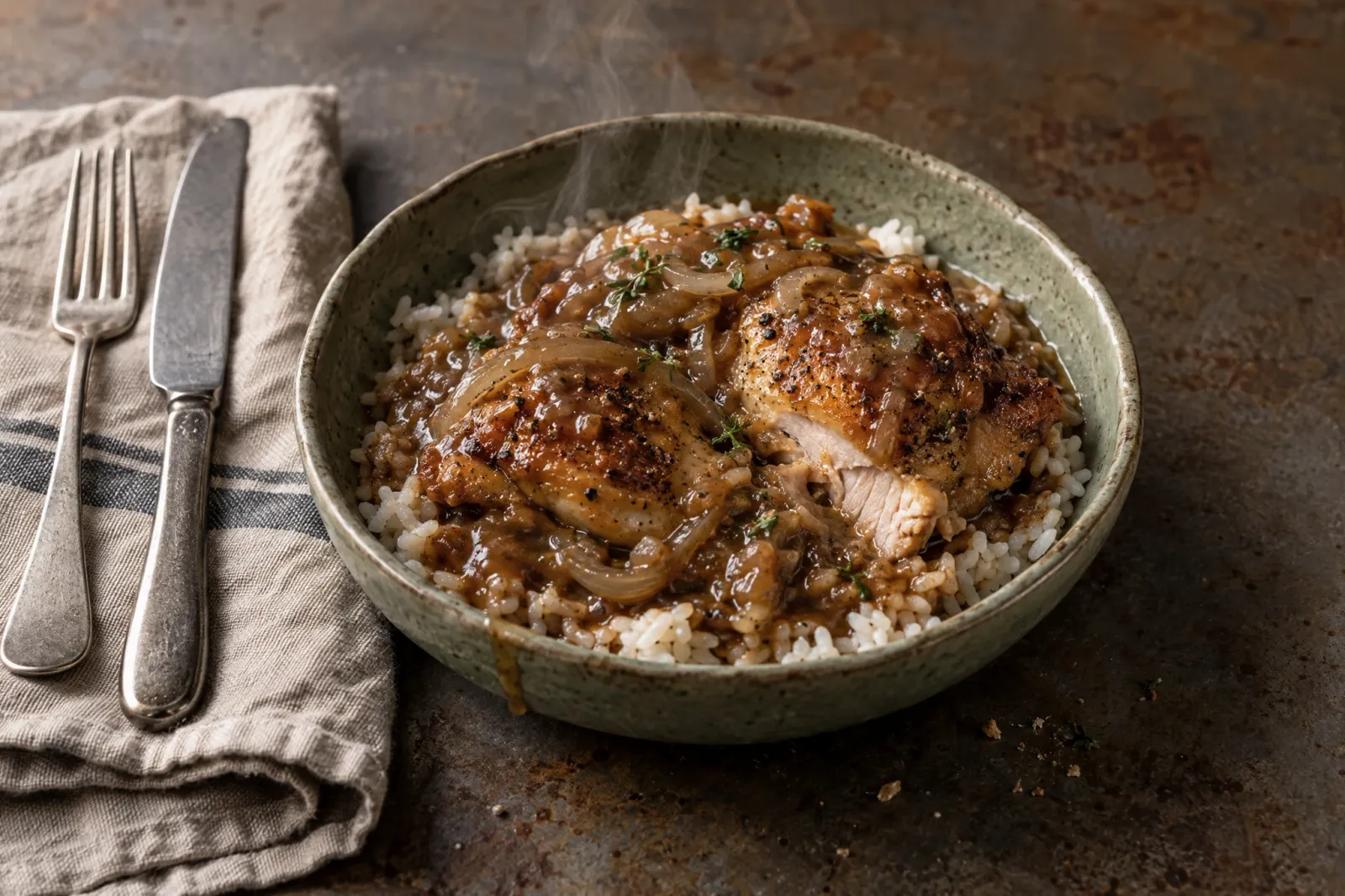
If you enjoy a slow, wine-dark braise, the site’s classic beef stew follows the same low-and-slow spirit with beef, and the smothered chicken and rice delivers braised, sauce-cloaked chicken in a one-pot Southern style.
Frequently asked questions
What's the difference between coq au vin and beef bourguignon?
Coq au vin and beef bourguignon are both slow French red-wine braises, but coq au vin is built around chicken braised in red wine with bacon, mushrooms, and pearl onions. Beef bourguignon uses beef as the main protein in a nearly identical wine-and-onion sauce, so the two dishes share a technique while the meat changes the cooking time and flavour.
Can I make coq au vin in a slow cooker?
Yes. Coq au vin works in a slow cooker; RecipeTin Eats' version braises on low for 6 hours, then transfers the stew to a pot and simmers uncovered so the sauce reduces before serving.
What is the best wine to use for coq au vin?
Coq au vin is best with a dry red wine, and the recipe uses 750 ml / 3 cups of pinot noir or another dry red. A sweet or heavily oaked bottle can throw the finished sauce out of balance, so stick to something dry.
How long does coq au vin keep in the fridge or freezer?
Cooked coq au vin keeps in the refrigerator for 3 to 4 days and freezes for 2 to 3 months as a meat-and-vegetable stew. Reheat it to 165°F before serving.
Do I have to marinate the chicken overnight?
The marinade is what gives coq au vin its depth, and the recipe refrigerates the chicken in wine for 12 to 24 hours. A shorter soak still flavours the meat, but the full overnight rest is what separates the classic braise from a quick stew.
Sources
- https://www.foodsafety.gov/food-safety-charts/safe-minimum-internal-temperatures
- https://www.foodsafety.gov/food-safety-charts/cold-food-storage-charts
- https://www.recipetineats.com/coq-au-vin/
- https://www.onceuponachef.com/recipes/coq-au-vin.html
- https://leitesculinaria.com/5399/recipes-julia-child-coq-au-vin.html
- https://damndelicious.net/2022/01/08/easy-coq-au-vin/
- https://www.theendlessmeal.com/julia-childs-coq-au-vin/