
15-Minute Tomato Basil Pasta for Lazy Nights
Ingredients
- 150 g capellini (angel hair) pasta
- 2,000 ml water
- 2 tsp extra-virgin olive oil
- 325 g baby plum tomatoes, halved
Instructions
- 1
Bring the 2,000 ml water to a boil in a large pot.
- 2
Add the 150 g capellini and cook until al dente, then drain.
- 3
Heat the 2 tsp olive oil in a skillet over medium heat, add the 325 g tomatoes, and cook, mashing occasionally, for 5-7 minutes until they soften and release their juices.
- 4
Toss the pasta with the tomato mixture and serve right away.
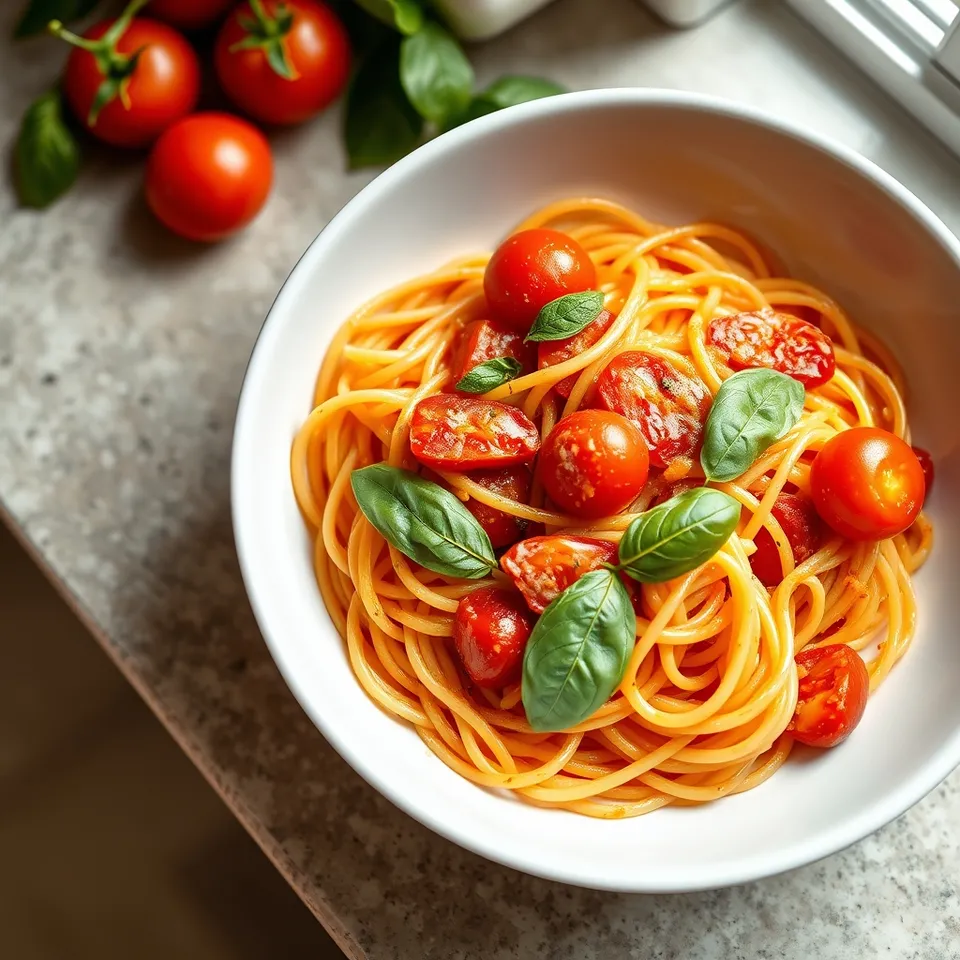
This tomato basil pasta is a fast dinner for tired nights, serving 2 at 346 calories per serving while keeping the method short and the ingredient list lean.
Why this belongs in lazy dinner ideas
| What matters | This recipe | A roundup page |
|---|---|---|
| Dinner happens fast | A finished pasta recipe with a short method. | A set of links that still needs sorting. |
| The sauce stays simple | Tomatoes soften quickly and do most of the work. | Technique is often buried under the list. |
| Leftovers stay clear | Storage and reheating guidance are built in. | Leftover notes are often missing. |
This tomato basil pasta earns its place in lazy dinner ideas because it removes the part that usually slows dinner down: deciding how to turn a few ingredients into something complete. The recipe gives a straight path from pot to pan to plate, so the cook is not juggling extra garnish steps or wondering whether the sauce needs another round of simmering.
The ingredient list stays tiny on purpose: 150 g capellini, 2,000 ml water, 2 tsp olive oil, and 325 g baby plum tomatoes. That narrow set of ingredients is what keeps the recipe readable at a glance and makes it easier to shop from memory when dinner needs to happen now.
Why a recipe beats a roundup
A roundup can be useful for inspiration, but it still leaves the work of choosing and translating ideas into a real meal. This tomato basil pasta does that work already, with exact quantities that match the brief and a method that does not depend on extra pantry digging or another dish to make it feel finished.
The structure matters as much as the flavor. A recipe card gives the full decision, while a list of links asks the reader to keep comparing options when the goal is simply to get dinner on the table.
Why this stays fast
The speed comes from a short boil and an even shorter tomato cook. The pasta moves from pot to drain to plate without any detour, and the tomatoes only need enough heat to soften and turn juicy before they meet the noodles.
That pace is why the recipe suits a weeknight better than a project dinner. It asks for steady attention, not constant stirring, and it rewards the cook for keeping the heat moderate and the steps in order.
For more dinner ideas, browse the dinner recipes hub, or try the overnight cinnamon roll breakfast casserole if you want another straightforward make-ahead recipe for a different meal.
What makes the sauce come together fast
The sauce works because the tomatoes soften and release juice in the same skillet heat. Instead of waiting for a long reduction, this tomato basil pasta uses heat, mashing, and a brief cook window to build something that feels saucy without becoming heavy.
That is the key reason the recipe reads as easy pasta dinner rather than a red sauce project. The tomato mixture stays loose enough to coat the capellini, which keeps the final bowl light and quick rather than thick and overworked.
The 5-7 minute tomato window
The source recipe puts the tomato cook at 5-7 minutes over medium heat, and that range is the point where the pieces break down enough to become a sauce. Earlier than that, the tomatoes are still firm; later than that, the skillet starts heading toward a jammy texture that is not the goal here.
During that window, occasional mashing helps the juices move out of the tomato halves and into the pan. The motion should stay gentle and steady so the tomatoes soften evenly instead of disappearing into a puree.
Keeping the sauce loose
The sauce should look glossy, not dry, when it meets the pasta. If the tomatoes collapse into a tight mass, the noodles lose the fresh, spoonable texture that makes this dish feel like a fast tomato basil pasta instead of a slow-cooked ragù.
That loose finish also makes the recipe adaptable at the table. A lighter sauce clings neatly to capellini and stays lively on the fork, which is useful when the goal is a simple dinner with as little fuss as possible.
Variations, add-ins, and when to stretch it
This tomato basil pasta is deliberately spare, but it still leaves room for small adjustments. The simplest path is to keep the same base and change the finish, which preserves the lazy-dinner promise while giving the bowl a more personal feel.
The best additions are ingredients that do not require another cooking project. Anything that can be folded in at the end or scattered on top works better than a longer simmer, because the sauce is already built to finish quickly.
Add basil or cheese if you want
Fresh basil is the most natural add-in because it matches the dish’s name and keeps the tomato flavor bright. Torn leaves can go over the top just before serving, where they stay fragrant instead of disappearing into the pan.
Cheese works the same way. A small shower of grated cheese can soften the acidity of the tomatoes and make the pasta feel a little fuller, but the recipe does not depend on it to hold together.
How to stretch it for more people
When the pan needs to feed more than the listed servings, the safest move is to keep the ratio of pasta to sauce in balance rather than crowding the skillet. A light tomato base stretches better when the noodles are coated evenly instead of piled high in a bowl.
That approach preserves the texture the recipe is aiming for. The tomato mixture should stay nimble enough to glide around the pasta, which is easier to maintain than trying to force a larger batch into a sauce that was designed to be simple.
Storage and reheating
Leftovers are part of the appeal here, because the sauce stays straightforward and the pasta reheats without much planning. This tomato basil pasta keeps its best texture when it is cooled, packed away promptly, and brought back gently instead of blasted.
The storage note also keeps the recipe honest about real life. A lazy dinner should still have a clear plan for tomorrow’s lunch, and this recipe does, as long as the pasta is treated like a perishable cooked dish rather than a pantry staple.
Fridge life
This tomato basil pasta keeps for up to 3 days in the fridge. That window is short enough to stay practical and long enough to make the recipe useful for another meal if the initial dinner leaves extra portions.
Cool the pasta before sealing it in a container so the sauce does not steam itself watery. Once chilled, it is ready for a fast reheat and does not need a fresh batch of tomatoes to feel complete again.
Best reheat method
The USDA puts the safe internal temperature at 165°F, so that is the number to aim for when reheating leftovers. Gentle heat helps the pasta warm through without drying the tomatoes or turning the noodles sticky.
The easiest path is to reheat just until the center is hot and the sauce loosens again. At that point, the leftovers have enough warmth to serve safely and enough moisture to taste close to the original bowl.
Frequently Asked Questions
- Can I use another pasta shape if I do not have capellini?
- This tomato basil pasta can use another long pasta shape if capellini is not available. Keep the method simple and stop when the pasta is cooked through, then coat it with the tomato mixture while it is hot.
- Can I use canned tomatoes instead of fresh baby plum tomatoes?
- This tomato basil pasta is built around halved baby plum tomatoes, which soften and release juices in 5-7 minutes over medium heat. Canned tomatoes can work in a pinch, but the fresh version keeps the sauce light and quick.
- How do I reheat leftover tomato basil pasta without drying it out?
- This tomato basil pasta keeps for up to 3 days in the fridge. Reheat it gently and use the USDA's 165°F safe internal temperature as the cue that the leftovers are hot throughout.