
Overnight Cinnamon Roll Breakfast Casserole
 By Amara Okafor
Ingredients
- 1 (36.5-ounce) package frozen cinnamon rolls, cut into quarters
- 4 large eggs
- 1 cup milk
- 3 tablespoons sugar
- 1 1/2 teaspoons vanilla extract
- 1/2 teaspoon ground cinnamon
- 1/4 teaspoon ground nutmeg
- Reserved cream cheese frosting from the cinnamon roll package
Instructions
- 1
Coat a baking dish with nonstick spray and spread the quartered cinnamon rolls evenly in the dish.
- 2
Whisk the eggs, milk, sugar, vanilla, cinnamon, and nutmeg in a medium bowl until combined.
- 3
Pour the custard over the rolls, cover the pan, and refrigerate for at least 6 hours or overnight up to 24 hours.
- 4
Heat the oven to 375°F and bake for 35 to 40 minutes until the rolls are golden brown on top.
- 5
Warm the frosting if needed, then drizzle it over the warm casserole before serving.
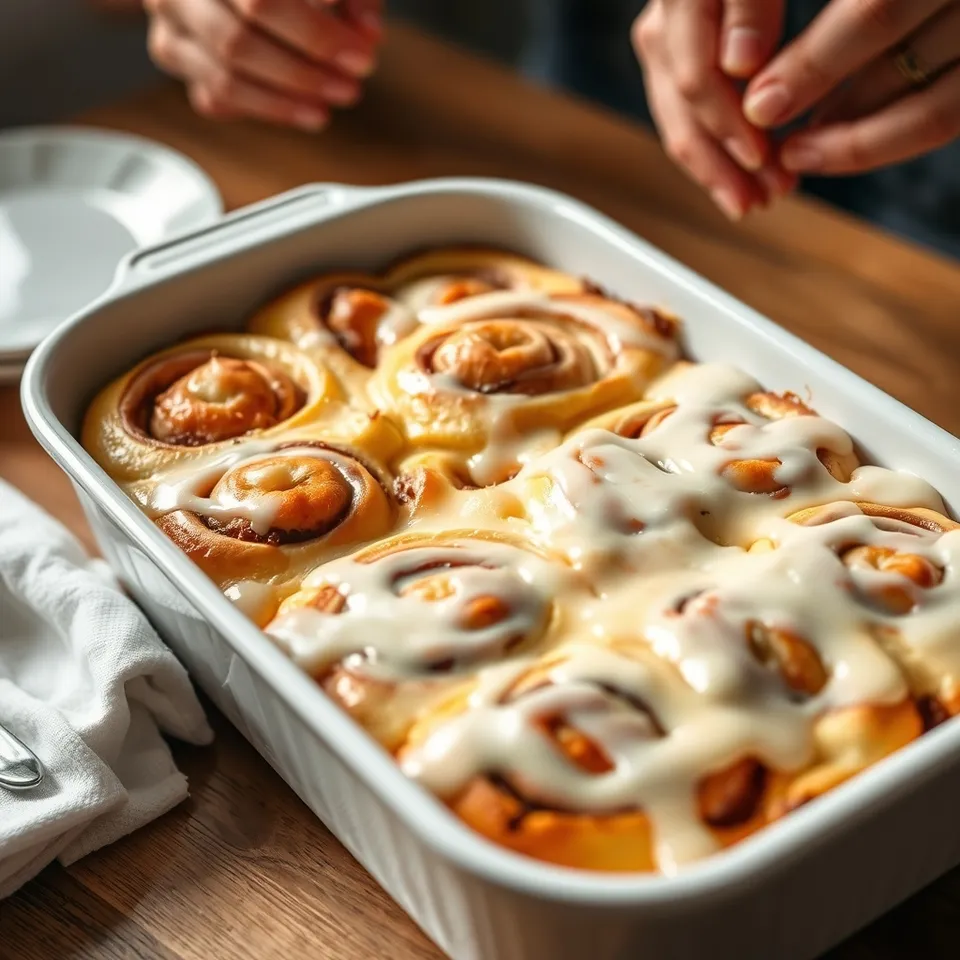
This overnight cinnamon roll breakfast casserole turns soft cinnamon rolls into a custardy brunch bake that can rest ahead, then finish with a golden top and frosting drizzle.
Ingredient notes and texture
| Component | What it does in the casserole | What to look for |
|---|---|---|
| Frozen cinnamon rolls | They give the bake its tender bread base and built-in cinnamon flavor. | Cut them so the pieces spread through the pan instead of stacking in one mass. |
| Egg custard | It turns the rolls into a soft breakfast casserole with a set center. | Mix until smooth so the liquid coats every piece evenly. |
| Frosting | It finishes the pan with the sweetness the rolls already promise. | Warm it just enough to drizzle without tearing the top. |
Frozen rolls
Frozen cinnamon rolls cut into quarters give the casserole plenty of edges for the custard to cling to. That shape lets the rolls absorb the liquid while still baking up as recognizable pieces, which keeps the texture soft and spoonable instead of collapsed.
The package dough also brings the cinnamon flavor that makes the casserole feel like brunch rather than plain egg bake. Because the rolls already carry sweetness, the rest of the recipe can focus on balance instead of adding more sugar to the pan.
Custard base
Eggs, milk, sugar, vanilla, cinnamon, and nutmeg build the custard that holds the casserole together. The mix should look smooth and even before it goes over the rolls so the spice and sweetness reach every bite.
That custard is the piece that makes the casserole feel creamy once it bakes. It softens the rolls without turning them into pudding, and it gives the finished dish a rich center that works with coffee, fruit, or a savory brunch spread.
Finish with frosting
Reserved frosting from the cinnamon roll package turns the bake into a proper cinnamon roll breakfast casserole instead of a plain breakfast pan. Warming it slightly makes it easier to drizzle, so the topping settles across the surface instead of clumping in one spot.
If a cook wants another breakfast-bake reference, the site’s breakfast recipes hub is the easiest place to browse, and the recipes index keeps the same format close at hand. Both links are useful when the goal is to plan a brunch menu around a sweet baked centerpiece.
Make-ahead bake method
Pan setup
Use the recipe’s specified baking dish so the rolls sit in a single layer and the custard can reach the corners. A wide pan gives the filling room to spread through the rolls, which helps the casserole bake evenly from edge to center.
Nonstick spray matters here because the sugar in the frosting and custard can cling to the sides as the pan bakes. The goal is a clean release and tidy squares, especially when the casserole is served straight from the dish at brunch.
Overnight chill
Cover the pan and chill it for at least 6 hours, or overnight up to 24 hours. That rest window is what makes the recipe work as a make-ahead breakfast, because the rolls have time to soak while the cook is doing everything else.
The covered pan also keeps the custard from drying out or picking up fridge odors. Set it on a level shelf so the liquid stays evenly distributed around the rolls, then move it directly to the oven when baking time arrives.
Bake until golden
Heat the oven to 375°F and bake for 35 to 40 minutes until the top turns golden and the center looks set. For egg dishes, the FDA lists 160°F as the doneness target, so a thermometer in the middle gives a clear check for the custard.
If the top browns early, a loose foil tent keeps the surface from overcoloring while the center finishes. The casserole is ready when the rolls look puffed, the custard no longer jiggles, and the pan smells like baked cinnamon and vanilla.
Storage and food safety
Leftovers
Cool the casserole promptly, then cover the dish or move slices to a sealed container. The frosting softens as the pan sits, so chilled leftovers are easiest to portion and reheat without losing shape.
Reheated slices still work well for a quick breakfast, especially if the pan was cut into neat squares before storing. The casserole keeps its best texture when the pieces are warmed gently rather than blasted until the edges dry out.
Refrigeration window
The FDA says perishable foods should be refrigerated within 2 hours of cooking or purchasing, or within 1 hour when the temperature is above 90°F. Keep the refrigerator at 40°F or below so the leftovers stay in the safe range.
That guidance gives this brunch casserole a clear after-dinner plan. Once the pan has cooled enough to handle, it belongs in the refrigerator instead of sitting out on the counter while the kitchen gets cleaned up.
Reheat safely
Reheat leftovers to 165°F so the casserole is hot all the way through. Covered slices warm gently in the oven, while individual portions can be finished in a microwave if they are turned partway through heating.
The same target works for the full pan or a single piece, which makes the leftovers easy to fit into a busy morning. Once the center is hot and the frosting has softened again, the casserole is ready to serve.
Frequently Asked Questions
- Can I make cinnamon roll breakfast casserole the night before?
- Overnight Cinnamon Roll Breakfast Casserole is designed for that schedule. Assemble it, cover it, and chill it so the custard can soak into the rolls before baking.
- How do I know when the casserole is baked through?
- Overnight Cinnamon Roll Breakfast Casserole is ready when the top is golden and the center looks set. For egg dishes, the FDA lists 160°F<!--f:638--> as the doneness target, so a thermometer should read at least that in the middle.
- How should I store and reheat leftovers?
- Overnight Cinnamon Roll Breakfast Casserole should be cooled, covered, and refrigerated promptly. The FDA says perishable foods should go into the refrigerator within 2 hours<!--f:635--> or within 1 hour<!--f:636--> when the temperature is above 90°F<!--f:636-->, and leftovers and casseroles should reheat to 165°F<!--f:639--> when served again.
Sources
- https://www.allrecipes.com/recipe/284651/quick-and-easy-cinnamon-roll-casserole/
- https://lilluna.com/overnight-cinnamon-roll-french-toast-bake/
- https://www.crazyforcrust.com/blueberry-cinnamon-roll-casserole/
- https://www.plainchicken.com/apple-cinnamon-roll-casserole/
- https://www.pleasecook.com/breakfast/apple-pie-cinnamon-roll-bake-recipe/
- https://www.pillsbury.com/recipes/apple-cinnamon-roll-bake/207b90f1-6b7f-4e4c-87d0-2f121e4490ec
- https://www.fda.gov/food/buy-store-serve-safe-food/safe-food-handling