Bisquick Breakfast Casserole with Sausage
 By Amara Okafor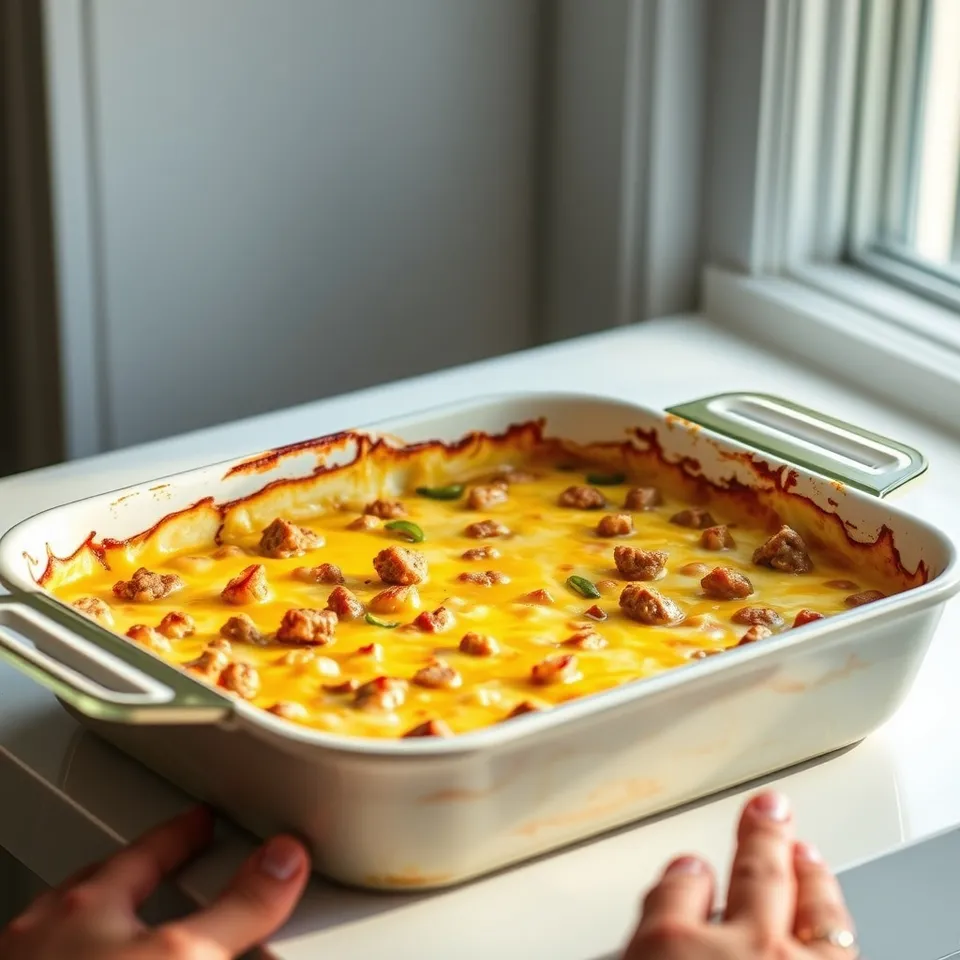
A make-ahead Bisquick breakfast casserole with sausage, eggs, cheese, and veggies—easy to assemble, bake, and serve for brunch or holidays.
The recipe
Researched & sourced- Prep
- 10 mins
- Cook
- 35-40 mins
- Total
- 55 mins
- Serves
- 8
- Calories
- 435 kcal
Ingredients
Makes 8 servings
- 1 lb. breakfast sausage, bulk and without casings
- 1 cup onion, chopped
- 1 bell pepper, chopped any color
- 6 large eggs
- 1 cup Bisquick All-Purpose Baking Mix
- 2 cups grated cheese
- 2 cups milk, whole milk works best but low-fat milk or half and half are okay
- 3 tsp mustard
- 2 tbsp maple syrup
- 1/2 tsp kosher salt
- Black pepper, to taste
Instructions
- 1
Heat the oven to 375°F and spray an 11×7 or 9×11-inch baking dish with baking spray.
- 2
In a large skillet over medium-high heat, cook the sausage with the onion and bell pepper until the meat is no longer pink and the vegetables are soft; drain off the grease.
- 3
In a large bowl, whisk the eggs, Bisquick, milk, mustard, maple syrup, salt, and pepper until smooth, then fold in the cheese.
- 4
Spread the sausage mixture in the dish, pour the batter over the top, and bake uncovered for 35 to 40 minutes, until the center is nearly set and reads 165°F.
- 5
Let the casserole rest for 10 minutes before cutting; to make it ahead, cover the assembled pan and refrigerate it for at least 4 hours and no longer than 24 hours before baking.
Quantities, temperatures, and times are researched from the published sources listed at the bottom of this page — never first-person kitchen tests.
Bisquick breakfast casserole with sausage is a make-ahead brunch bake that layers browned sausage, bell pepper, and onion under a cheesy egg-and-Bisquick batter, then bakes until set. It serves 8 and comes together in 55 minutes.
Why this Bisquick casserole works
The casserole’s texture comes from the Bisquick batter, which bakes into a soft, almost quiche-like layer around the sausage and vegetables instead of a separate crust. Because the eggs and baking mix are whisked smooth and poured over the cooked sausage mixture, the whole pan sets into one cohesive bake that slices cleanly for a brunch crowd.
That structure is what separates it from a crustless quiche or a potato-heavy breakfast bake. The Bisquick brings just enough lift and body to hold the eggs, cheese, and meat together without forming a heavy crust, so the result is spoonable in the center and firm enough at the edges to cut into tidy squares.
Its make-ahead flexibility is what makes it a practical holiday dish. The assembled pan can rest in the refrigerator for at least 4 hours and no longer than 24 hours, so the cook can do the work the night before and bake it fresh in the morning. That chill window comes straight from the source recipe, and it turns a last-minute scramble into a set-it-and-forget-it plan.
The bake is defined by numbers rather than guesswork. The recipe calls for 375°F and 35 to 40 minutes in the oven, and it ties the finish to the USDA’s safe internal temperature of 165°F for casseroles. A thermometer in the center removes the guess from “is it done,” which is exactly the reassurance a cook wants before a table full of guests.
For a sweeter take on the same assemble-ahead-and-bake rhythm, the overnight cinnamon roll breakfast casserole follows the same plan with a custard base, and the full breakfast recipes hub has more brunch ideas.
Ingredient notes and smart swaps
The ingredient list balances savory, creamy, and a touch of sweet. Most items have a simple swap, so the recipe stays flexible without changing the method.
| Ingredient | Role in the bake | Easy swap |
|---|---|---|
| 1 pound breakfast sausage | Savory base and the bulk of the protein | Turkey sausage or a plant-based crumble |
| 1 cup onion and 1 bell pepper | Sweetness, aroma, and texture | Any color of bell pepper |
| 6 large eggs | The binder that sets the casserole | Not recommended to cut; the structure depends on them |
| 1 cup Bisquick and 2 cups milk | The batter that creates the soft center | Low-fat milk or half and half |
| 2 cups cheese and 3 teaspoons mustard | Savory depth and sharpness | Sharp cheddar, Monterey Jack, or mozzarella |
| 2 tablespoons maple syrup and 1/2 teaspoon salt | Sweetness balance and seasoning | Honey, or omit the syrup for a fully savory bake |
The sausage is the first decision. The source calls for 1 pound of bulk breakfast sausage without casings, which browns quickly and breaks apart in the skillet. Draining the grease after browning keeps the casserole from turning heavy, and that step is easier with bulk sausage than with links that need to be sliced and picked over.
The aromatics do double duty. Cooking the 1 cup of chopped onion and the bell pepper in the same skillet as the sausage softens them and lets them pick up the meat’s flavor, so the vegetables add sweetness and texture without demanding a second pan.
The batter is the heart of the casserole. Six large eggs are whisked with 1 cup of Bisquick All-Purpose Baking Mix and 2 cups of milk, and the source notes whole milk gives the richest result while low-fat milk or half and half still work. That egg-and-mix combination is what turns a skillet meal into a sliceable breakfast bake, so it is worth whisking until the mixture looks completely smooth.
The seasonings are small but load-bearing. The 3 teaspoons of mustard sharpen the richness so the cheese and eggs don’t taste flat, and the 2 tablespoons of maple syrup add just enough sweetness to nod at breakfast without turning the dish sweet. A 1/2 teaspoon of kosher salt and black pepper to taste round out the pan, and 2 cups of grated cheese — sharp cheddar, Monterey Jack, or mozzarella — melt through the custard to finish it.
Because the calorie count is approximate and depends on the sausage, milk, and cheese you choose, the published figure is a guide rather than a promise. Sticking with whole milk and a full-fat sausage pushes it up, while low-fat milk and leaner turkey sausage bring it down.
Make-ahead, baking, and doneness tips
The method is a four-step plan — assemble, chill, bake, and rest — and each step has a number attached so there is nothing to guess at the oven.
Assemble and chill ahead
The make-ahead step is the whole reason this recipe earns a holiday slot. Build the casserole in an 11×7 or 9×11-inch baking dish, cover it, and refrigerate for at least 4 hours and no longer than 24 hours. That window gives the batter time to hydrate while the egg mixture stays safely chilled, and it means the night before is plenty of lead time for a morning bake.
Bake to temperature
Heat the oven to 375°F and bake uncovered for 35 to 40 minutes, until the center is nearly set and the edges are golden. For an exact finish, the USDA lists 165°F as the safe internal temperature for casseroles, so an instant-read thermometer in the middle is the most reliable check when the color looks done but the center still wiggles.
Rest before cutting
Let the baked casserole rest for 10 minutes before slicing. The short rest lets the center finish setting from residual heat, so the pieces hold together when they hit the plate instead of slumping into the pan.
A timing table makes the whole plan easy to follow:
| Stage | Time or temperature | What to watch for |
|---|---|---|
| Chill ahead | 4 to 24 hours | Covered pan on a level fridge shelf |
| Bake | 375°F for 35 to 40 minutes | Center nearly set, edges golden |
| Doneness check | 165°F | Thermometer in the middle |
| Rest | 10 minutes | Center firms, clean slices |
Storage and leftover reheating
Leftovers are easy to handle if the cooling is prompt. The USDA says cooked food should be refrigerated within 2 hours of cooking, so once the casserole has cooled enough to handle, cover the dish or move slices to a sealed container and get them into the refrigerator.
In the refrigerator, the leftovers keep for 3 to 4 days. Chilled slices reheat well, and portioning the casserole into squares before storing makes it simple to warm a single serving for a weekday breakfast instead of reheating the whole pan.
For a longer horizon, the same USDA guidance notes leftovers can be frozen for 3 to 4 months. Thaw frozen casserole in the refrigerator overnight, then reheat covered so the cheese and custard warm through without drying out at the edges.
Frequently asked questions
Can I assemble Bisquick breakfast casserole the night before?
Yes. Assemble the casserole in the baking dish, cover it, and refrigerate it for at least 4 hours and no longer than 24 hours before baking. That overnight window gives the Bisquick batter time to hydrate while the raw egg mixture stays safely chilled in the refrigerator.
How do I know when the casserole is done?
Bake the Bisquick breakfast casserole at 375°F for 35 to 40 minutes, until the center is nearly set and the edges are golden. For an exact check, the USDA lists 165°F as the safe internal temperature for casseroles, so an instant-read thermometer in the middle is the most reliable way to confirm it is done.
How long do leftovers keep in the fridge?
Refrigerate leftovers within 2 hours of baking, and they will keep in the refrigerator for 3 to 4 days. Cover the dish or move slices to a sealed container so the casserole does not dry out, and reheat individual portions until hot all the way through.
Can I freeze Bisquick breakfast casserole?
Yes. Cool the baked casserole completely, then wrap it tightly and freeze it. The USDA notes leftovers can be frozen for 3 to 4 months, so you can thaw the casserole in the refrigerator overnight and reheat it covered until it is hot through.
Sources
- https://www.getonmyplate.com/bisquick-breakfast-casserole-with-sausage/
- https://www.plainchicken.com/bisquick-sausage-breakfast-casserole/
- https://www.fsis.usda.gov/food-safety/safe-food-handling-and-preparation/food-safety-basics/safe-temperature-chart
- https://www.fsis.usda.gov/food-safety/safe-food-handling-and-preparation/food-safety-basics/leftovers-and-food-safety